If you are sourcing
FPV drone bare fiber for UAV applications, you have likely noticed one thing:
G657A2 optical fiber prices have gone through the roof. Over the past year, G.657.A2 prices surged from 32 RMB/km to approximately 240 RMB/km—an increase of up to 650%.
But here is a problem no one is talking about: some buyers are paying A2 prices and receiving A1 fiber.
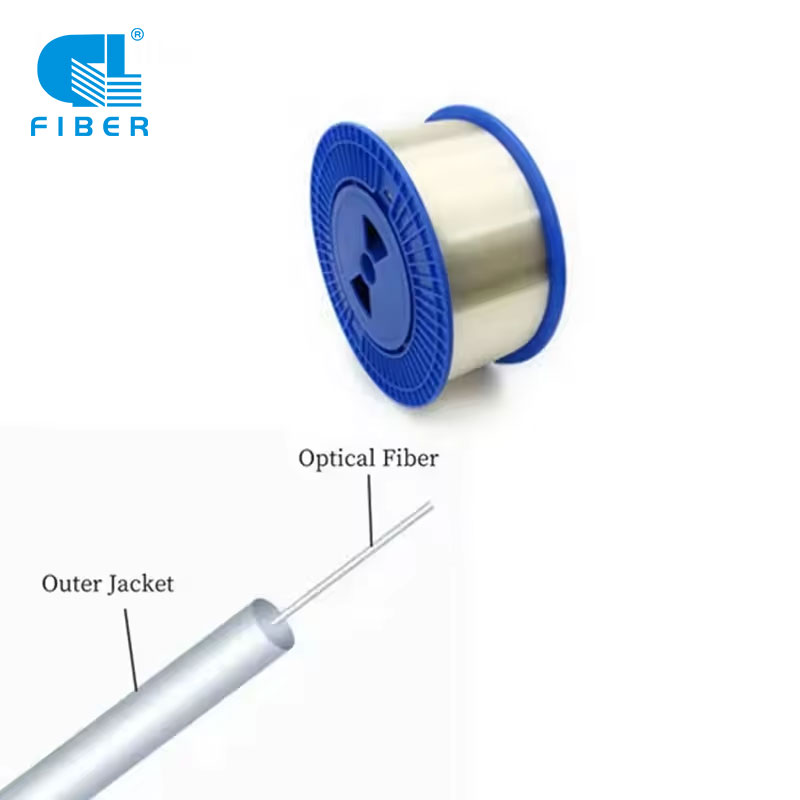
G.657.A1 and G.657.A2 look nearly identical to the naked eye. Both are single mode fiber products. Both have the same 9μm core and 125μm cladding diameters. But their performance—especially in demanding FPV drone applications—could not be more different.
This article breaks down the key differences between g657a1 optical fiber and g657a2 optical fiber, explains why the price gap exists, and gives you actionable advice on how to avoid being cheated when sourcing G657a2 fiber for drones.
📊 G.657.A1 vs G.657.A2: Side-by-Side Comparison
Parameter G.657.A1 Fiber G.657.A2 Fiber Why It Matters
Minimum Bend Radius 10 mm 7.5 mm A2 handles 25% tighter bends
Macrobending Loss @ 1550nm (15mm radius) ≤ 0.25 dB ≤ 0.03 dB A2 has ~88% lower loss in tight bends
ITU-T Classification G.657.A1 G.657.A2 A2 is optimized for extreme bend conditions
G.652.D Compatibility Fully compatible Fully compatible Both splice with existing networks
Typical Applications FTTH, cabinets, residential corners FPV drones, AI data centers, MDUs A2 is required for mission-critical drone use
Current Market Price $16.50–$19.50/km $27–$33/km A2 commands a significant premium
According to the ITU-T G.657 standard,
G.657.A1 fibers are appropriate for a minimum design radius of 10 mm, while G.657.A2 fibers are appropriate for a minimum design radius of 7.5 mm.
🔬 What Makes G.657.A2 the Go-To Fiber for FPV Drones?
The primary difference lies in bending capability:
G.657.A1 fiber is designed for mild bend improvements—ideal for avoiding bend loss in typical cabinet installations and residential doorway corners.
G.657.A2 fiber is engineered for extreme bend conditions—essential where fibers are sharply bent or coiled in very small spaces.
Why This Matters for Drones
For
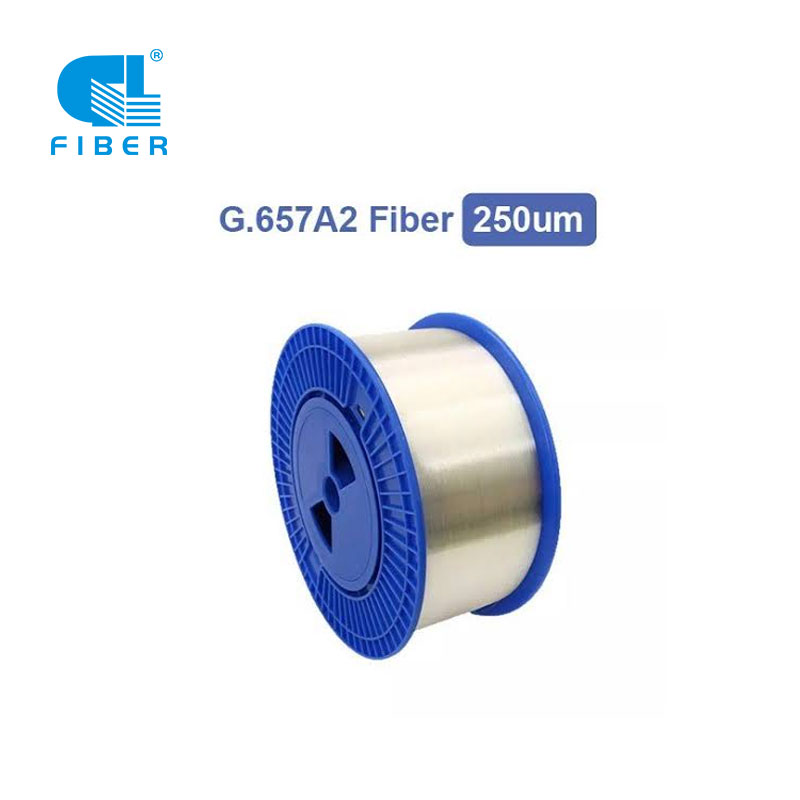
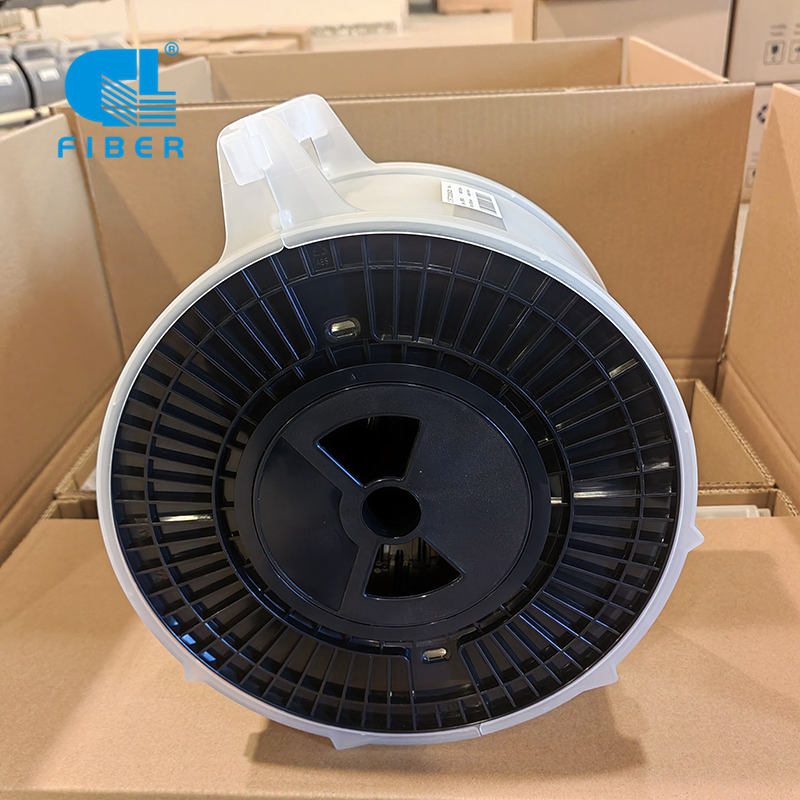
FPV drone bare fiber applications, the fiber must be wound onto compact spools (often 0.25mm optical fiber diameter) and deployed under extreme conditions mid-flight. Each mission consumes 20–40 kilometers of specialized optic bare fiber.
The risk: If you buy G.657.A1 labeled as A2 for drone applications, the fiber can fail during extreme bending in the field. With A2's 0.03 dB loss versus A1's 0.25 dB loss at tight bends, the performance gap is 88%—and that gap can mean the difference between a successful mission and a catastrophic failure.
📈 Application Scenarios: Which One Do You Actually Need?
G.657.A1 Fiber – The Cost-Effective Workhorse
G.657.A1 fiber provides a substantial improvement over standard G.652.D, with a guaranteed minimum bend radius of 10 mm. It is designed for:
-
FTTH deployments with predictable routing
-
Standard cabinet installations and residential doorway corners
-
Cost-conscious projects where extreme bending is not required
-
Choose G.657.A1 if: Your project involves standard indoor cabling with manageable bend radii.
G.657.A2 Fiber – The High-Performance Specialist
G.657.A2 fiber pushes bend resistance further with a minimum bend radius of 7.5 mm, offering superior performance where fibers are sharply bent or coiled in very small spaces. It is essential for:
-
FPV drone optical fiber – where fiber is coiled on tiny spools and subjected to extreme bending during deployment
-
AI data centers – high-density cabling in tight server racks
-
Multi-Dwelling Unit (MDU) deployments – navigating narrow conduits and tight corners
-
Choose G.657.A2 if: Your project involves FPV drones, high-density data centers, or any application where space is at an absolute premium.
💰 Current Market Pricing: Know What You Should Be Paying
Based on market data from June–July 2026:
Fiber Type Current Price Range Year-over-Year Increase
G.652.D (Standard) $12–$17/km ~400–550%
G.657.A1 (Bend-Improved) $16.50–$19.50/km ~487%
G.657.A2 (High-Performance) $27–$33/km ~650%
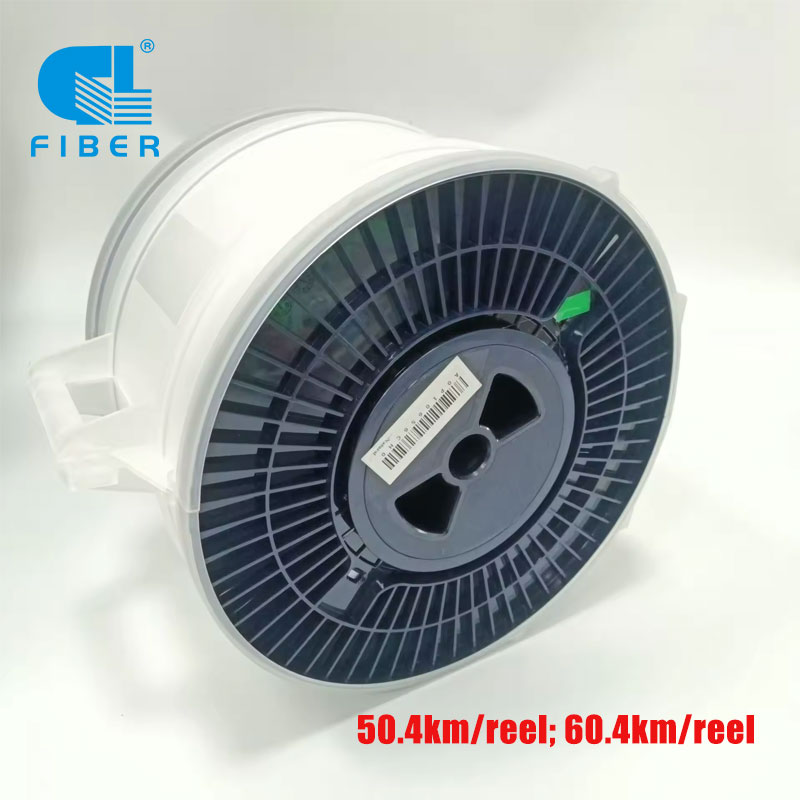
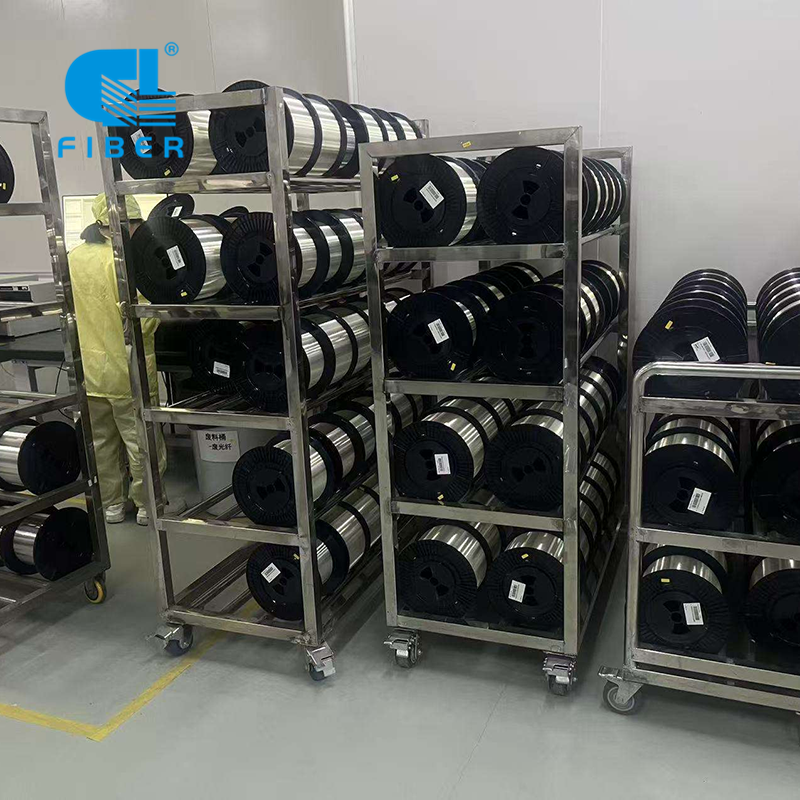
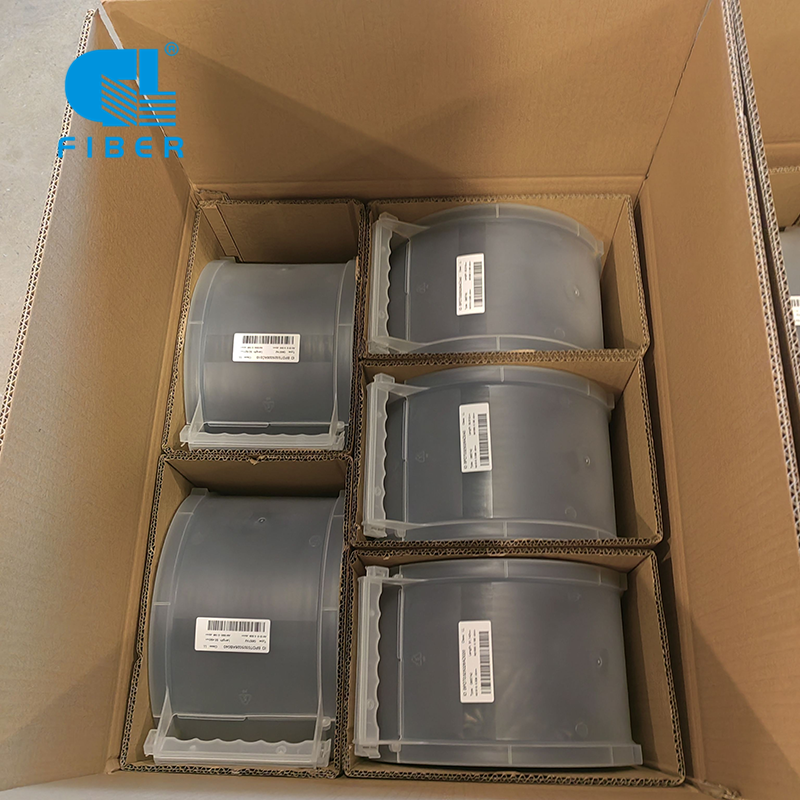
GL FIBER's current pricing: $26–27/km on 50.4km spools – genuine G.657.A2, factory-direct.
The global supply-demand gap is estimated to reach 15% in 2026–2027—a deficit unseen in nearly a decade. Major manufacturers have orders booked through Q1 2027.
⚠️ How to Avoid Being Cheated: 5 Critical Checks
1. Demand Macrobending Loss Test Reports
Genuine G.657.A2 must show ≤0.03 dB loss at 1550nm with a 15mm bend radius. Do not accept "typical values"—demand batch-specific data.
2. Verify ITU-T Compliance Certificates
Certificates should match your shipment's batch number. Cross-reference the manufacturer's name and certification date.
3. Inspect Physical Specifications
Coating diameter: 245 ± 15 μm (0.25mm nominal)
Consistent coloration and smooth coating surface
Professional spooling without tangles or uneven winding
4. Watch for Red Flags
-
Pricing significantly below $27/km for G.657.A2—likely A1 or substandard fiber
-
"No documentation available" or refusal to provide batch-specific test reports
-
Inability to arrange factory visits or video calls
-
Pressure tactics with "today-only" offers
5. Partner with Source Factories
Process control is only visible from the inside. A source factory that controls its own preform and drawing capacity provides direct quality visibility, batch traceability, and consistent quality—not reliant on third-party suppliers.
🚀 Market Outlook: What's Driving the Surge?
1. The FPV Drone Revolution
The most dramatic demand driver comes from the defense sector. Fiber-optic guided drones are immune to electronic jamming, making them essential in modern defense environments.
Key market data:
-
Ukraine allocated UAH 44 billion for FPV drone procurement
-
Combined Russian and Ukrainian consumption reached 50–60 million kilometers in 2025
-
Ukraine has enacted tax incentives for domestic drone manufacturers, including import duty exemptions on optical fiber components
2. The AI Data Center Boom
-
A single GPU cluster requires 5–10 times more fiber than traditional data centers
-
Global data center fiber demand reached 69.6 million core-km in 2025
-
Projected to exceed 100 million core-km in 2026
3. The Supply Bottleneck
-
Fiber production is constrained by the supply of fiber preforms
-
Expanding preform capacity takes 18–24 months and requires massive capital investment
-
All major manufacturers are running at 100% capacity
✅ Why GL FIBER?
With 22+ years of manufacturing experience since 2004,
GL FIBER is a trusted source factory for G657A2 optical fiber, G657A1 optical fiber, and FPV drone bare fiber products.
ISO9001, ISO14001, OHSMS18001 certified
Full process control—from preform to finished spool
Complete transparency—factory visits and video calls always welcome
Serving 200+ countries and regions



 ADSS Fiber Optic Cable
 OPGW Optical Ground Wire
 Bare Conductor
 Communication Optical Fibre
 Polarization-maintaining Fiber
 Aerial Fiber Cable
 Duct Fiber Cable
 Direct Buried Fiber Cable
 FTTH Drop Cable
 Air Blown Micro Cable
 Armored Fiber Optic Cable
 High Density Ribbon cable
 Biologically Protective Cable
 FTTX Tactical Cable
 Indoor Fiber Optic Cable
 Hybrid Fiber Optic Cable
 Fiber Optic Assemblies
 Company Profile
 Development History
 Qualification Honor
 Company Videos
 Exhibiting Overseas
 Our Solution