If you are sourcing g657a2 optical fiber, drone optic fiber, or
fiber optical spool products for FPV drone applications, you have likely experienced soaring prices, extended lead times, and supply uncertainty. As of September 2026, the market for 50.4km
optical fiber spool products remains exceptionally tight, with no immediate relief in sight.
This article analyzes current demand trends—with a focus on August 2026 import data from Ukraine, Poland, and Russia—examines the production capacity and pricing of major Chinese manufacturers, provides a September 2026 price outlook, and offers practical procurement advice from
GL FIBER.
📊 August 2026 Import Trends: Ukraine, Poland & Russia
Russia: 100% Import Dependency
The most dramatic demand shift comes from Russia. Following the shutdown of its domestic optical fiber plant in mid-2025, Russia became entirely dependent on imported fiber, primarily from China. This is reflected in the August 2026 import data:
Russia's share of global fiber consumption surged from less than 1% to an estimated 10.5%, with August imports remaining at elevated levels
Chinese suppliers have increased prices for the Russian market by 2.5 to 4 times since early 2025
Russia's 2026 drone production is expected to reach 4 to 5 million units, generating massive demand for drone optic fiber
Ukraine: Government-Driven Procurement
Ukraine continues to increase its procurement of FPV drones, with fiber-optic models receiving priority funding. August 2026 data shows:
Ukraine has enacted tax incentives, including import duty and VAT exemptions, for domestic drone manufacturers supplying defense forces
Combined Russian and Ukrainian fiber-optic drone consumption reached 50–60 million kilometers in 2025, with 2026 demand projected to reach 80 million core-km
Ukraine's drone manufacturers remain heavily dependent on imports, primarily from China, creating security-of-supply concerns
Poland & European Markets
Poland and other European nations are increasing UAV procurement, driving demand for
bare optical fiber spools. The fiber optic guided drones market is projected to reach approximately $2.3 billion in 2026** and grow to **$4.5 billion by 2036.
August 2026 Regional Demand Summary:
Region
Key Driver
Estimated 2026 Demand Impact
Russia
100% import dependency, drone production
~50-60 million km (combined with Ukraine)
Ukraine
Government procurement, tax incentives
Part of the 50-60 million km total
Poland & EU
Growing UAV programs, defense procurement
Increasing
Global AI Data center build-outs ~200 million core-km in 2026
🏭 Major Chinese Manufacturers: Capacity & Pricing
Production Capacity Overview
China's fiber optic industry is dominated by major players who collectively hold over 60% of the global market share. Here is the current capacity status:
Manufacturer
Estimated Annual Production Capacity
Current Status
-
YOFC (长飞) ~140 million core-km Orders booked through Q1 2027
-
Hengtong (亨通) ~110 million core-km Running at full capacity
-
ZTT (中天科技) ~70 million core-km High utilization
-
FiberHome (烽火) ~66 million core-km High utilization
Current Capacity Reality:
-
The top four manufacturers' preform production capacity is operating at near 100% utilization
-
According to CRU, China's preform capacity utilization reached 84.3% in 2026, with effective capacity near full load
-
Manufacturers are prioritizing higher-margin G.657.A2 fiber, which requires 10-15% more production time per kilometer than standard G.652.D
Current Export Pricing (August-September 2026)
Based on market intelligence, here are the approximate export price ranges:
Fiber Type
Export Price Range (USD/km)
Key Notes
-
G.657.A2 (0.25mm) $27–33/km Premium pricing due to demand
-
G.657.A1 $16.50–19.50/km Lower demand, more available
-
G.652.D $12–17/km Supply squeezed by A2 production shift
Major manufacturers have orders booked through Q1 2027, with some factories seeing 4–5x increases in production and sales. The global supply-demand gap is estimated to reach 15% in 2026-2027—a deficit unseen in nearly a decade.
📈 September 2026 Price Outlook for G657A2 Optical Fiber
Current Market Pricing
As of September 2026, G.657.A2 fiber trades at approximately $27–33/km (230–260 RMB). This represents a 650% increase from early 2025 levels of approximately 32 RMB/km.
September 2026 Forecast
Industry analysts project the following for September 2026:
-
Timeframe Expected Price Range (RMB/km) Expected Price Range (USD/km) Key Drivers
-
September 2026 250–280 RMB $28–32/km Q3 procurement peak; tight supply
-
October–December 2026 260–320 RMB $30–37/km GB300 GPU production; year-end demand
-
2027 280–350 RMB $32–40/km Supply-demand gap widening
Key Factors Supporting September Prices
1. AI Data Center Demand
-
Global AI fiber demand is projected to reach ~200 million core-km in 2026
-
US AI fiber demand alone reached 1.5 billion core-km in 2026, triple the 2025 level
-
NVIDIA's GB300 GPU begins mass production in Q4 2026, driving a new wave of data center fiber demand
2. Preform Capacity Constraints
-
The expansion cycle for optical preforms is 18–24 months—meaning new capacity approved today will not come online until late 2027 at the earliest
-
Even under extreme conditions, capacity can be expanded by only 10-15% through process optimization alone
3. Military Drone Demand
-
Drone-related fiber demand is projected to reach 80 million core-km in 2026
-
Combined Russian and Ukrainian consumption continues to absorb significant production capacity
4. Q3-Q4 Procurement Season
-
Telecom operators typically increase procurement in Q3, adding demand pressure
-
Some industry analysts predict "August and September will see even more intense competition" for fiber allocation
🛒 Procurement Advice: How to Buy G657A2 Fiber in 2026
1. Understand the A1 vs. A2 Difference
G.657.A1 and G.657.A2 look nearly identical, but their performance differs significantly:
Parameter
G.657.A1
G.657.A2 (Genuine)
Min. Bend Radius
10 mm
7.5 mm
Macrobending Loss (1550nm, 15mm radius)
≤ 0.25 dB
≤ 0.03 dB
Suitability for FPV Drones
Fails in dynamic deployment
Engineered for drones
The risk: Buying A1 labeled as A2 means the fiber exceeds its bend limit during spooling or deployment. Signal attenuation spikes—and the drone loses connection mid-flight.
2. Verify What You Are Buying
✅ Demand batch-specific macrobending loss test reports – Do not accept "typical values"
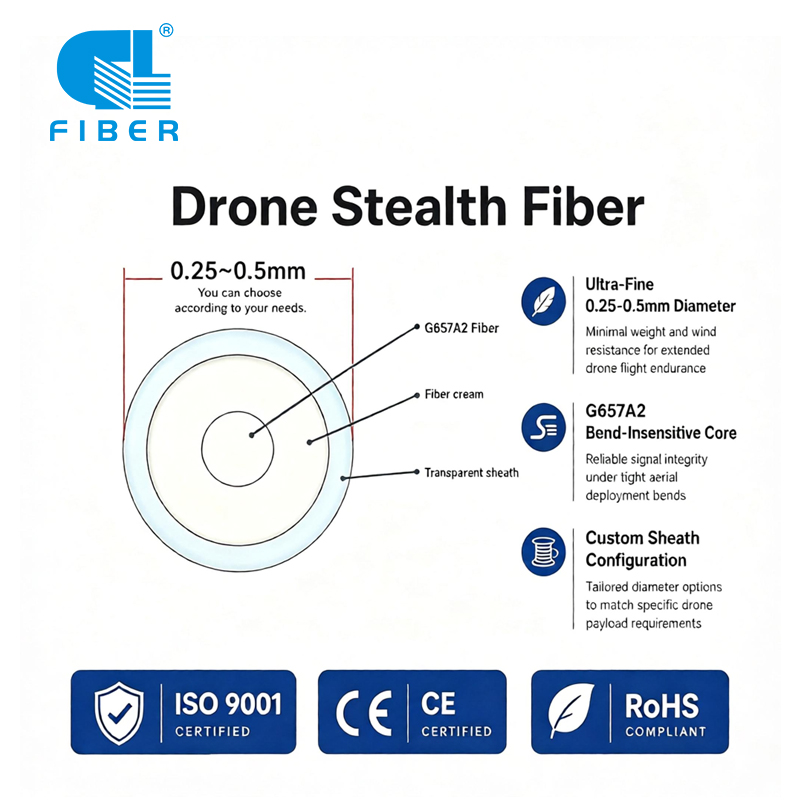
✅ Verify coating diameter – 0.25mm (245±10 μm) is standard for drone applications
✅ Check ITU-T compliance – Genuine G.657.A2 comes with
ITU-T G.657.A2 certification matching your shipment's batch number
3. Watch for Warning Signs
🚩 Pricing significantly below $27/km – Likely A1 or substandard fiber
🚩 "No documentation available" – Legitimate manufacturers provide full traceability
🚩 100% upfront payment to unknown suppliers – High fraud risk
🚩 Inability to arrange factory visits or video calls – Real manufacturers welcome transparency
4. Secure Your Supply Chain Now
With orders booked through Q1 2027 at major manufacturers, the time to secure your fiber optical spool needs is now:
-
Lock in long-term capacity – Long-term contracts are the only reliable way to secure supply
-
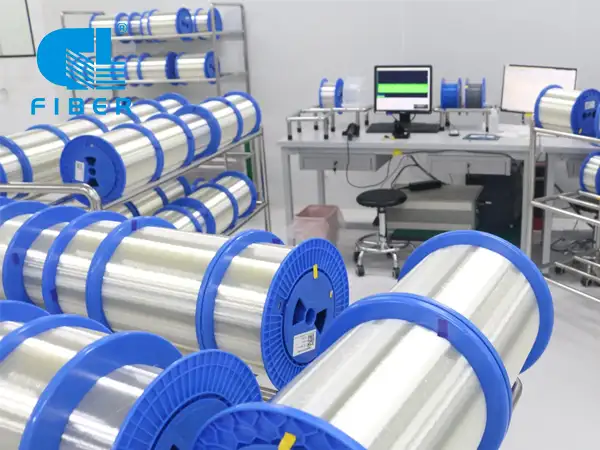
Partner with source factories – GL FIBER controls its own preform and drawing capacity
-
Plan for extended lead times – Current lead times have extended from 8-12 weeks to 20+ weeks
✅ Why GL FIBER?
With 22+ years of experience, GL FIBER is a trusted source factory for G657A2 optical fiber:
-
ISO9001, ISO14001, OHSMS18001 certified
-
Full process control – from preform to finished spool
-
Batch-specific test reports for every shipment
-
Complete transparency – factory visits and video calls always welcome
-
Serving 200+ countries and regions
Current G.657.A2 Pricing: $27/km on 50.4km spools – genuine, tested, and ready to ship.



 ADSS Fiber Optic Cable
 OPGW Optical Ground Wire
 Bare Conductor
 Communication Optical Fibre
 Polarization-maintaining Fiber
 Aerial Fiber Cable
 Duct Fiber Cable
 Direct Buried Fiber Cable
 FTTH Drop Cable
 Air Blown Micro Cable
 Armored Fiber Optic Cable
 High Density Ribbon cable
 Biologically Protective Cable
 FTTX Tactical Cable
 Indoor Fiber Optic Cable
 Hybrid Fiber Optic Cable
 Fiber Optic Assemblies
 Company Profile
 Development History
 Qualification Honor
 Company Videos
 Exhibiting Overseas
 Our Solution