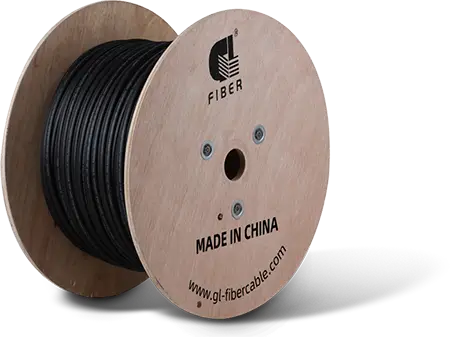
For decades, the physics of optical transmission remained unchanged: light travels through solid glass, slowed by the material it passes through.
Hollow core fiber (HCF) changes everything.
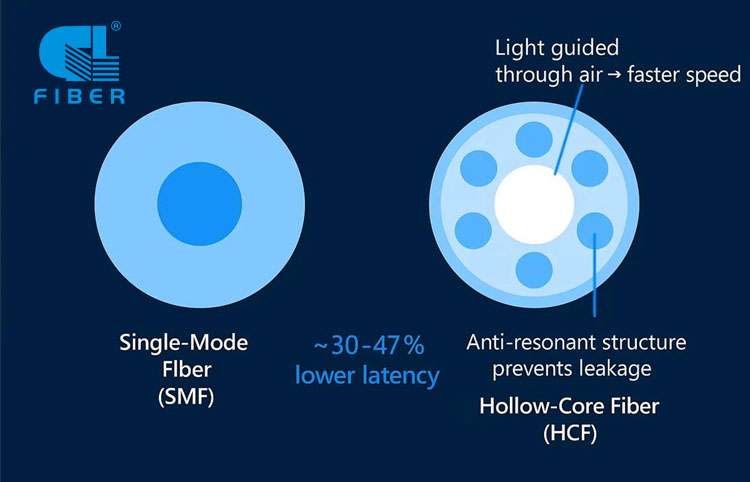
By replacing the solid glass core with an air-filled waveguide, hollow core fiber allows light to propagate at speeds approaching its velocity in vacuum. This breakthrough delivers latency reduction of up to 30% compared to traditional single-mode fiber—a difference measured in microseconds per kilometer that translates into real competitive advantage for AI data centers, high-frequency trading, and next-generation networks.
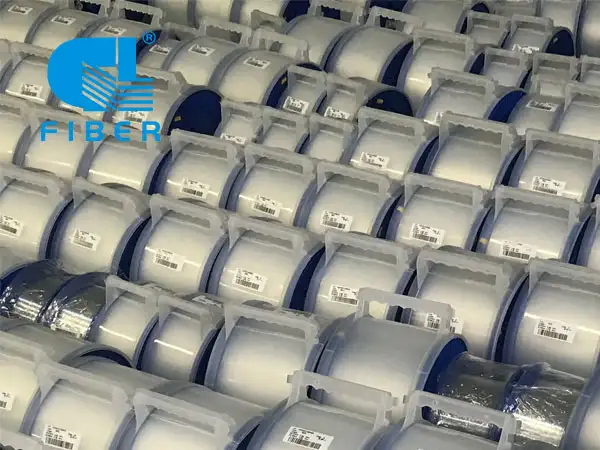
is proud to offer a comprehensive range of hollow core fiber (HCF) solutions, from bare fiber to cables and adapters, bringing this transformative technology from laboratory to commercial deployment.
With over two decades of optical manufacturing expertise, GL FIBER delivers a complete ecosystem of hollow core fiber solutions—spanning bare fiber, cabling, and interconnection adapters—bridging the gap between breakthrough research and real-world network deployment.
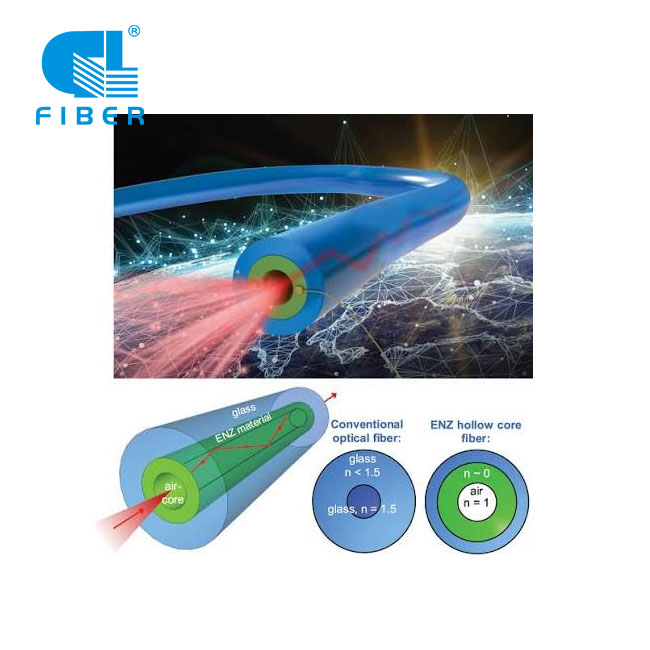
What Is Hollow Core Fiber?
Unlike conventional single-mode fiber, which transmits light through solid silica glass,
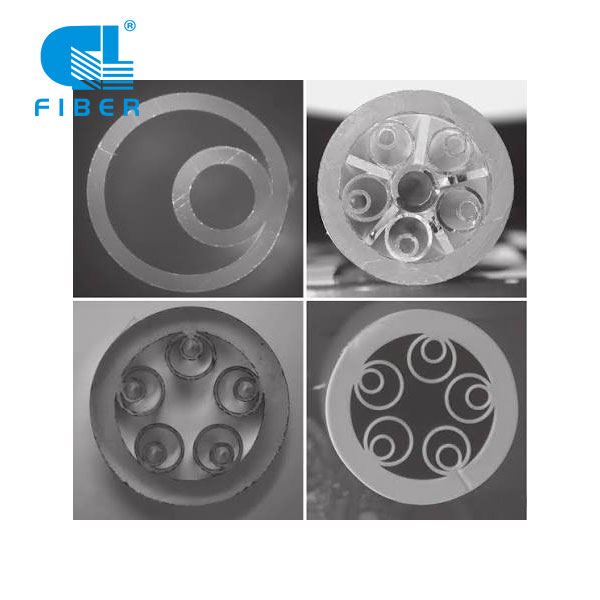
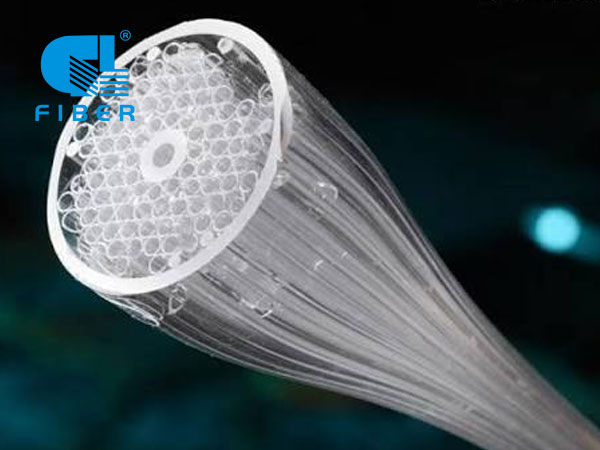
hollow core fiber features an air-filled core and a precisely engineered anti-resonant microstructured cladding. This fundamental difference delivers extraordinary advantages:
Parameter Hollow Core Fiber (
HCF) Traditional Single-Mode Fiber
-
Latency ~3.33 µs/km ~4.9 µs/km
-
Latency Reduction Up to 30% lower Baseline
-
Nonlinearity Ultra-low Significant
-
Dispersion Low Moderate-High
-
Rayleigh Scattering Ultra-low Inherent
-
Laser Damage Threshold Higher Lower
-
Transmission Window Broad (visible to mid-IR) Limited
Hollow core fibers are characterized by low latency, wide transmission bandwidth, low loss, and low nonlinearity—making them ideal for high-capacity, high-speed, low-latency, and long-distance optical transmission networks.
Market Growth: The Numbers Speak for Themselves
The hollow core fiber market is experiencing explosive growth, driven by AI infrastructure demands and the need for ultra-low latency connectivity.
Key market data:
-
Global hollow core optical fiber market was valued at $180.5 billion in 2024** and is projected to reach **$618.9 billion by 2030, at a CAGR of 22.8%
-
Hollow-core fiber market grew from $1.23 billion in 2025** to an estimated **$1.43 billion in 2026, at a CAGR of 16.4%
-
Hollow-Core Fiber Backbone Network Market is expected to reach $3.60 billion by 2031, growing at a CAGR of 37.97%
-
The market is projected to reach approximately $1.66 billion by 2034, with a CAGR of 24.44% from 2026 onward
What's Driving This Growth?
1. AI Data Centers and Cloud Computing
AI infrastructure is the primary catalyst. Hyperscalers like AWS, Microsoft, and Google are actively testing and deploying hollow core fiber for data center interconnect (DCI) and AI networking. Hollow core fiber enables cloud-computing providers to locate data centers closer to power and water sources while maintaining ultra-low latency connectivity. As one industry observer noted, "Hollow-core fiber will help to ensure that the network powering those experiences is among the most advanced and highest performing in the world".
2. High-Frequency Trading and Financial Networks
Every microsecond matters in financial markets. Hollow core fiber's 30% latency reduction makes it the technology of choice for ultra-low latency connectivity between trading hubs.
3. Quantum Communications and Advanced Research
Hollow core fiber's ultra-low nonlinearity and low dispersion make it ideal for quantum transmission, pulse compression, and gas sensing applications.
4. High-Power Laser Transmission
The higher laser damage threshold of hollow core fiber enables high-power laser delivery across ultraviolet to mid-infrared wavelengths.
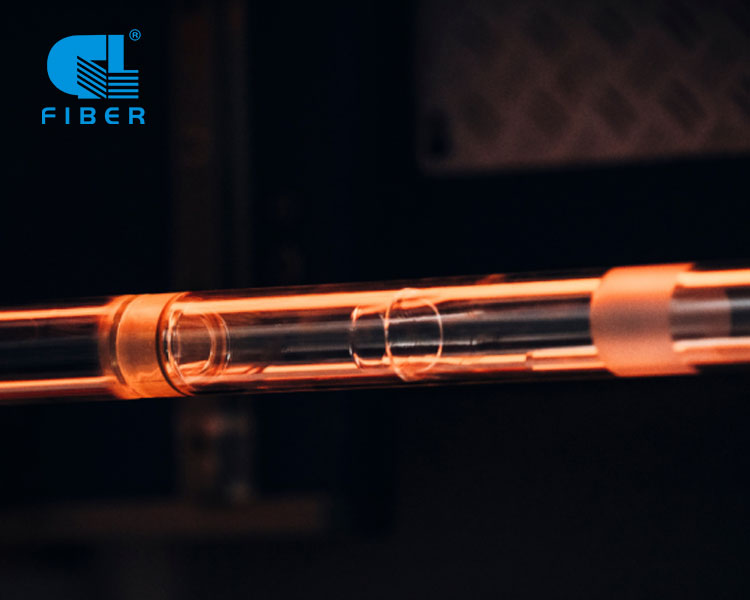
GL FIBER Hollow Core Fiber Products
GL FIBER has developed a range of hollow core fibers suitable for wavelengths spanning from visible light to mid-infrared, achieving internationally leading performance levels and scale production.
Performance Parameters
-
Fibre Type HCF-235/370-C+L HCF-235/370-O HCF-235/370-1μm HCF-215/360-0.85μm HCF-325/460-2μm HCF-425/540-3μm
-
Core Diameter (µm) 30±2 30±2 30±2 27±2 40±2 52±2
-
Cladding Diameter (µm) 235±5 235±5 235±5 215±5 325±5 425±5
-
Coating Diameter (µm) 370±10 370±10 370±10 360±10 460±10 540±10
-
Transmission Window (nm) 1530-1625 1260-1360 980-1100 800-920 1960-2120 2820-3100
-
Max Attenuation (dB/km) 0.5 0.5 2 1.4 1.4 62
Source: GL FIBER product specifications
Key performance highlights:
-
Attenuation as low as 0.5 dB/km in C+L and O bands—approaching commercial viability
-
Macrobending loss ≤0.1 dB at 1550nm and 1310nm
-
Dispersion coefficient of 3±3 ps/nm/km at 1550nm and 1310nm
-
Custom wavelengths available upon request
Hollow Core Fiber Adapter
GL FIBER also offers a hollow core fiber adapter designed to connect hollow core fibers with single-mode fibers. Featuring a modular packaging design, the adapter enables optical power coupling between hollow core fibers and single-mode fibers with low insertion loss and low return loss. This allows for direct connection of hollow core fibers to existing transmission systems, enhancing user convenience.
Hollow Core Fiber Price and Cost Considerations
Hollow core fiber price currently ranges between $3,000–5,000 per fiber kilometer—significantly higher than traditional single-mode fiber. Industry experts note that parity with standard fiber is unlikely to be achieved in the next 10 years.
Why the premium?
-
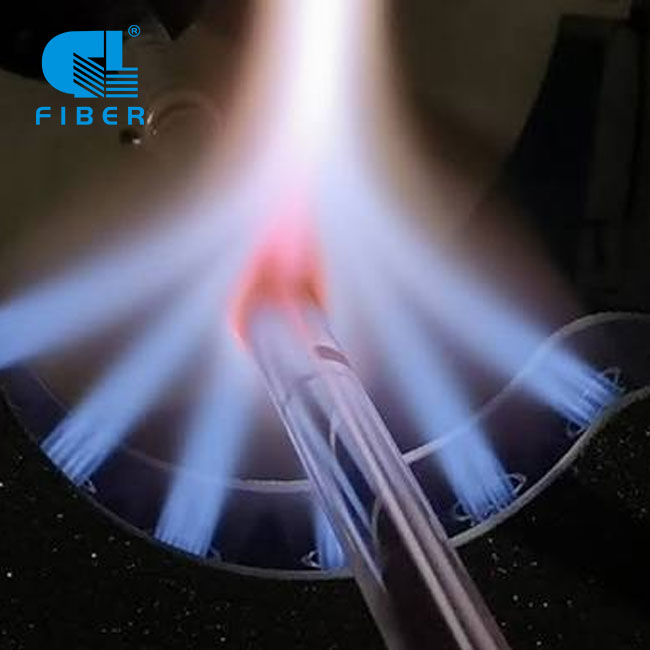
Complex manufacturing: The anti-resonant microstructured cladding requires precise capillary preparation and specialized drawing processes
-
Limited production scale: Commercial production is still ramping up
-
R&D intensity: Continuous innovation to reduce attenuation and increase length
-
The value proposition: Hollow core fiber's value is currently concentrated in scenarios where the latency gain clearly justifies the cost. For AI data centers, high-frequency trading, and long-haul DCI, the performance advantage can outweigh the price premium.
GL FIBER's advantage: By leveraging independently synthesized raw materials and a cutting-edge drawing process, GL FIBER has achieved scale production with internationally leading performance levels—offering customers a reliable supply source for this next-generation technology.
How to Select Quality Hollow Core Fiber?
When sourcing hollow core fiber or hollow core fiber connectors, consider these factors:
1. Verify Attenuation Specifications
For C+L band applications, look for ≤0.5 dB/km attenuation
Demand batch-specific test reports, not "typical values"
2. Check Transmission Window Compatibility
Ensure the fiber's transmission window matches your system wavelength
GL FIBER offers options from 800nm to 3100nm
3. Evaluate Connector Performance
Hollow core fiber connectors should provide low insertion loss and low return loss
GL FIBER's HCF adapter enables seamless integration with existing single-mode fiber systems
4. Assess Customization Capabilities
Can the manufacturer customize fiber attenuation and delivery length?
Are custom wavelengths available?
5. Partner with Established Manufacturers
Look for manufacturers with proven R&D capability and production scale
GL FIBER has achieved internationally leading performance levels and scale production
The Future of Hollow Core Fiber
The trajectory is clear: hollow core fiber is moving from laboratory to commercial application. Major milestones include:
-
Attenuation records: YOFC recently demonstrated 0.04 dB/km attenuation, with single-fiber draw length reaching 91.2 km
-
Standardization: In February 2026, CCSA approved its new standard project, Test Methods for Transmission Characteristics of Hollow-Core Fibers for Communication
-
Commercial deployments: Prysmian and Relativity Networks are now deploying hollow core fiber cables for AI data center applications
-
Industry adoption: Major fiber manufacturers are adding hollow core fiber to their product lines
As AI traffic continues to drive unprecedented demand for bandwidth and low latency,
hollow core fiber (HCF) is poised to become a cornerstone of next-generation optical networks.
Conclusion
Hollow core fiber represents a paradigm shift in optical communications. By guiding light through air rather than glass, it delivers up to 30% lower latency, ultra-low nonlinearity, and broad transmission bandwidth—making it the ideal solution for AI data centers, high-frequency trading, quantum communications, and high-power laser applications.
GL FIBER is proud to be at the forefront of this revolution, offering high-performance hollow core fiber products with internationally leading specifications and scale production capabilities



 ADSS Fiber Optic Cable
 OPGW Optical Ground Wire
 Bare Conductor
 Communication Optical Fibre
 PM Fiber
 Aerial Fiber Cable
 Duct Fiber Cable
 Direct Buried Fiber Cable
 FTTH Drop Cable
 Air Blown Micro Cable
 Armored Fiber Optic Cable
 High Density Ribbon cable
 Biologically Protective Cable
 FTTX Tactical Cable
 Indoor Fiber Optic Cable
 Hybrid Fiber Optic Cable
 Fiber Optic Assemblies
 Company Profile
 Development History
 Qualification Honor
 Company Videos
 Exhibiting Overseas
 Our Solution