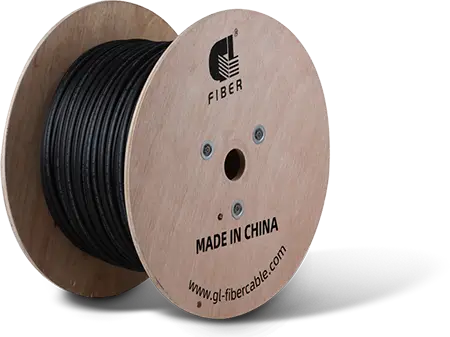
If you are sourcing G657A2
bare optical fiber for FPV drone tethers or robotic inspection systems, the answer is straightforward and uncomfortable: G657A2 is no longer priced like a commodity fiber, and it is increasingly difficult to secure at any price. According to industry data cited by Chinese manufacturers and CRU,
G.657.A2 fiber moved from approximately 32 RMB per core-km in 2025 to 240 RMB per core-km in 2026, a surge of roughly 650%. For the 0.25mm fiber format commonly used in drone tether spools, current allocation-based pricing sits in the 240–260 RMB per core-km range, equivalent to roughly 28–35 USD/km depending on coating, spool length, and delivery terms.
That is the headline number. The more important question for buyers is why this happened—and whether the price you are quoted reflects real G657A2 performance or a repackaged substitute.
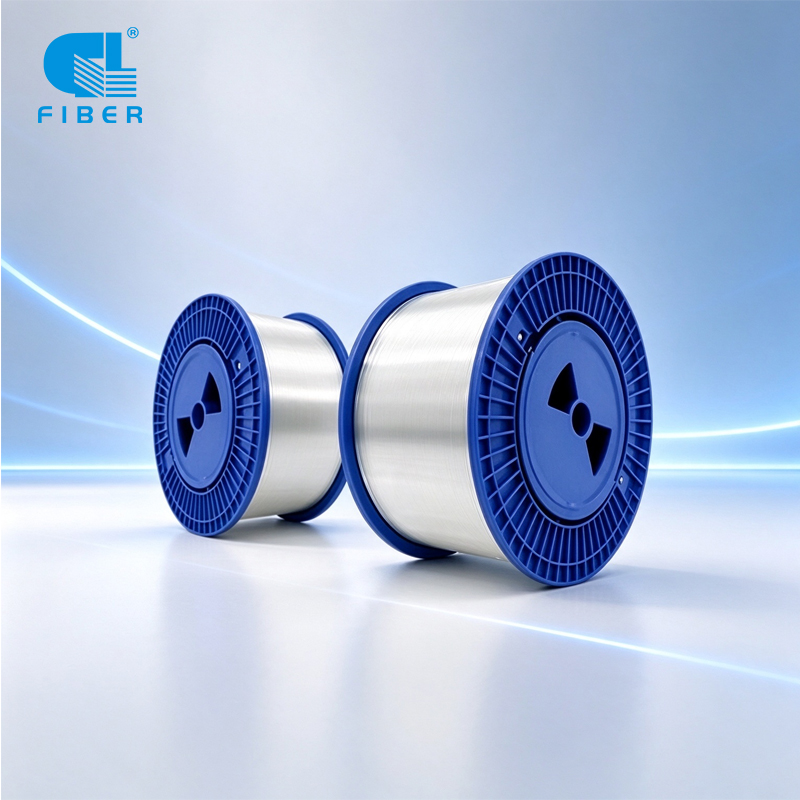
Why G657A2 Is “Hard to Find” in China Right Now?
Demand Has Shifted from Telecom to AI Data Centers
The old fiber demand cycle was driven by 5G buildouts and fiber-to-the-home. That cycle is over. The current shortage is driven by AI intelligent computing centers, where fiber runs not to households but to GPU clusters. A single hyperscale AI data center can consume 5 to 10 times the fiber of a traditional data center. Global data center fiber demand reached approximately 69.6 million core-km in 2025 and is projected to exceed 100 million core-km in 2026.
G657A2 Is the Preferred Grade for Bend-Sensitive, High-Density Routes
Inside AI racks and dense interconnect environments, bend-insensitive fiber is not optional. G657A2’s minimum bend radius and low macrobending loss make it the default choice for high-density patching and compact cable routing. When data center builders scaled up, they absorbed available G657A2 capacity first.
Supply Cannot Respond Quickly Enough
Roughly 70% of fiber chain profit sits in the upstream preform stage, and preform expansion takes 1.5 to 2 years with heavy capital requirements. A new 3,500-ton preform plant requires about 4 billion RMB in investment and two years to build. During the previous downturn, many smaller producers exited, and leading manufacturers remained cautious about expansion. The result: a structural supply gap that cannot be closed in a quarter or two.
The Supply Gap Is Structural, Not Temporary
For G657-class fiber specifically, 2026 global demand is estimated at 370 million core-km, while effective Chinese factory capacity is only about 200–210 million core-km—a gap of roughly 46%. Chinese manufacturers have shifted 30–40% of capacity toward specialty fibers, but that reallocation also squeezes standard single-mode supply. This is why buyers of sm fiber and bare optical fiber across grades are feeling the pressure simultaneously.
Allocation Behavior Has Replaced Open Ordering
Major Chinese fiber producers now report order books extending into 2027, and some customers must pay deposits simply to reserve factory allocation. For smaller buyers—especially FPV drone integrators and robotics companies that need
0.25mm fiber in modest volumes—this allocation environment makes spot purchasing difficult and price comparison unreliable.
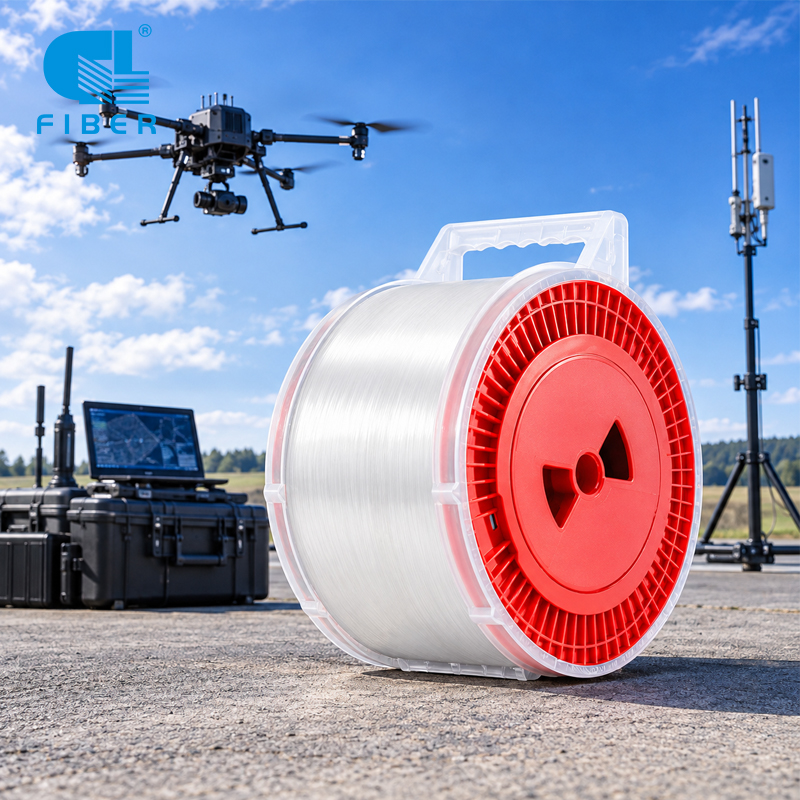
What This Means for FPV and UAV Fiber Buyers?
The FPV drone tether market sits at the intersection of two pressures. On one side, G657A2 is the correct fiber grade for ultra-micro bend-insensitive tether spools because it delivers low attenuation at 1310/1550 nm while surviving tight coiling and high-speed deployment. On the other side, the AI data center boom has made G657A2 a strategically allocated material, not an off-the-shelf component.
A critical risk for buyers: not all fiber sold as “G657A2” is equal. Some suppliers may substitute lower-grade bend-insensitive fiber, off-spec G657A1, or reclaimed fiber when
G657A2 allocation is tight. For drone tether applications, that substitution can show up as higher attenuation, inconsistent coating diameter, or mechanical failure under rapid payout. The 0.25mm fiber format demands tight dimensional control—cladding 125.0±0.7 µm, coating concentricity ≤12 µm, and proof test ≥9.0 N—and these parameters matter more, not less, when the fiber is deployed at speed from a small spool.
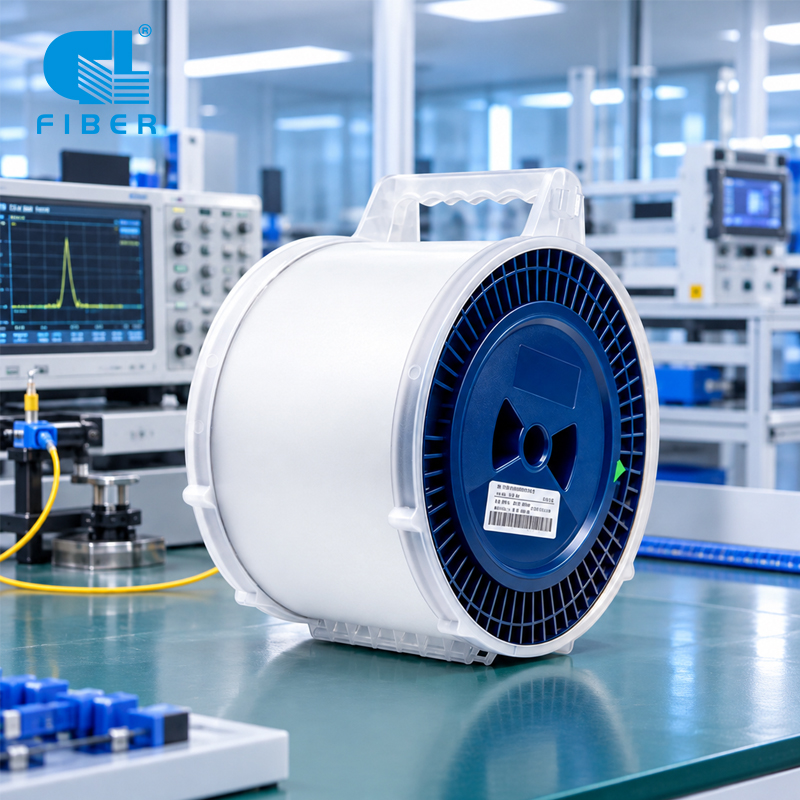
Practical Procurement Guidance: How to Buy G657A2 at the Right Price and Quality?
1. Do Not Chase the Lowest Quote
If a quote is dramatically below the current 240–260 RMB/core-km allocation range for
0.25mm G657A2, ask what is actually on the reel. Legitimate G657A2 at drone-grade dimensional tolerance is not available at pre-2025 prices. A suspiciously low quote usually signals one of three things: grade substitution, short length on the spool, or a trader without real factory allocation.
2. Verify the Fiber, Not Just the Certificate
Request the fiber coding and test report matching the reel. For G657A2 drone tether applications, confirm:
Attenuation @1310 nm ≤ 0.35 dB/km and @1550 nm ≤ 0.21 dB/km (GL FIBER’s published specification)
Macrobending loss at 15 mm radius, 1 turn, 1550/1625 nm
Coating diameter 245±10 µm and cladding non-circularity ≤1%
Proof test ≥9.0 N
A supplier who cannot tie a test report to the specific reel should not be treated as a qualified source.
3. Lock Allocation Early—but Structure It Smartly
In an allocation market, waiting for spot availability is a losing strategy. However, committing full volume to a single delivery is also risky if your drone program timeline shifts. The practical approach is to secure spool allocation with a deposit, specify staged delivery across 3–6 months, and agree on a price adjustment mechanism tied to published market indices rather than open-ended “market price at shipment.”
4. Match Fiber Diameter to Your Actual Deployment
G657A2 is available in 0.20mm, 0.25mm, 0.27mm, and 0.30mm coated diameters. The 0.25mm fiber is the most common balance between micro-diameter and handling robustness for FPV tethers. If your mission profile involves very short spools and minimal payout tension, 0.20mm may reduce weight; if payout speed is high or the spool will see rough handling, 0.27mm may offer better mechanical margin. Do not let a supplier talk you into a diameter simply because that is what they have in stock.
5. Prioritize Suppliers with Fiber-to-Spool Integration
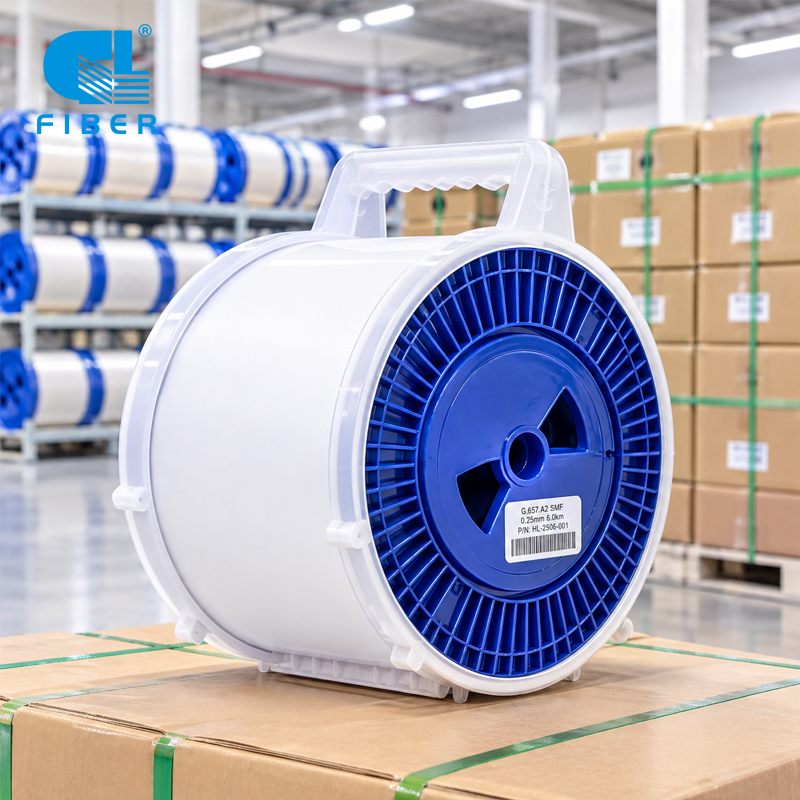
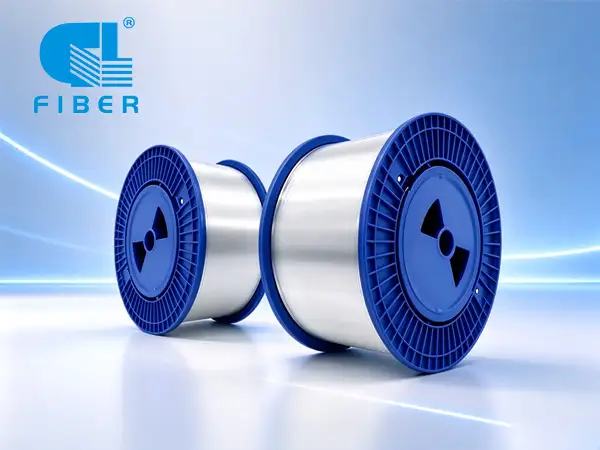
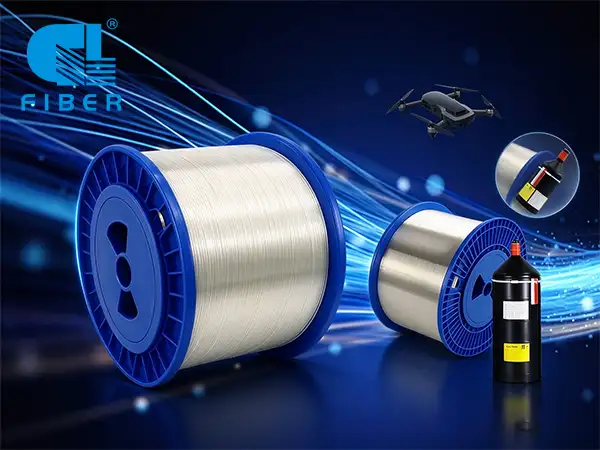
The most reliable source for drone tether fiber is not a fiber trader but a supplier that controls fiber sourcing, micro-coating, and spool winding under one quality system. GL FIBER’s G657A2 spool product is built around this integration: the fiber meets ITU-T G.657.A1/A2/B2 specifications, and the spool is configured for 1 km to 50 km lengths with resin-coated micro-fiber options for FPV and UAV missions. When allocation is tight, suppliers with direct factory relationships and in-house spooling can protect delivery timelines better than pure traders.
Bottom Line for 2026 Procurement
The G657A2 market is tight for a reason that will not disappear quickly: AI infrastructure demand is real, preform capacity is slow to add, and specialty fiber allocation will remain constrained through 2026 and likely into 2027. For FPV and UAV fiber buyers, the correct response is not to wait for prices to return to old levels—that is unlikely—but to qualify a technically capable supplier now, verify the fiber grade at the reel level, and secure allocation with staged delivery terms.
If you are comparing G657A2 spool options for drone tethering, start with the actual optical and mechanical specifications, not the headline price. GL FIBER’s G657A2 bare
optical fiber spool for UAV/FPV drones is available in 0.20/0.25/0.27mm diameters and 1–50 km lengths, with full test documentation. For current allocation availability and spool configuration, contact our team with your mission profile and length requirements.



 ADSS Fiber Optic Cable
 OPGW Optical Ground Wire
 Bare Conductor
 Communication Optical Fibre
 Polarization-maintaining Fiber
 Aerial Fiber Cable
 Duct Fiber Cable
 Direct Buried Fiber Cable
 FTTH Drop Cable
 Air Blown Micro Cable
 Armored Fiber Optic Cable
 High Density Ribbon cable
 Biologically Protective Cable
 FTTX Tactical Cable
 Indoor Fiber Optic Cable
 Hybrid Fiber Optic Cable
 Fiber Optic Assemblies
 Company Profile
 Development History
 Qualification Honor
 Company Videos
 Exhibiting Overseas
 Our Solution