In today's high-speed communication networks, selecting the right single mode fiber is crucial for performance, reliability, and future readiness. Among the various ITU-T standards,
G.652.D,
G.657.A1,
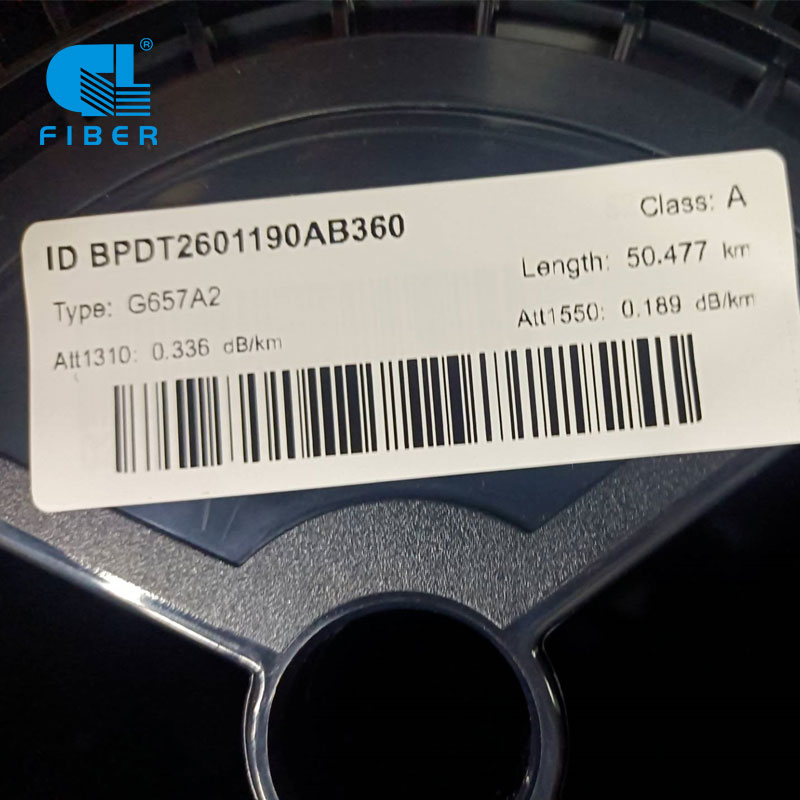
G.657.A2, and
G.657.B3 fibers are widely adopted, each designed for specific applications and environments. Understanding their differences helps network planners, installers, and operators make informed choices. This article breaks down the key characteristics, advantages, and typical use cases of these optical fiber types.
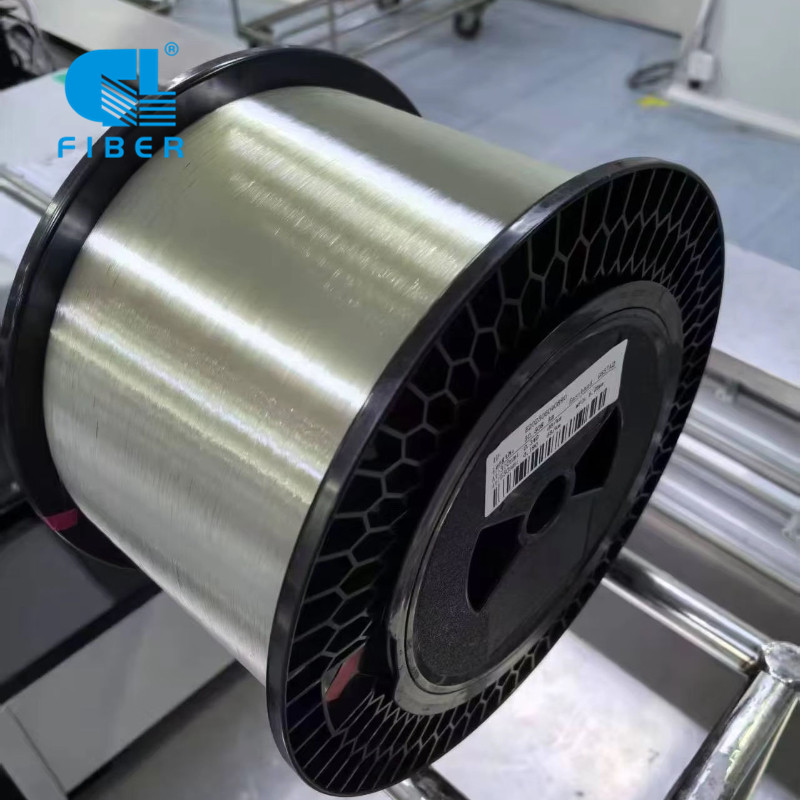
G.652.D fiber, often referred to as standard single-mode fiber (SSMF), is the most commonly deployed bare fiber worldwide. It is the latest revision of the G.652 family, combining the best attributes of its predecessors.
Key Features: It offers excellent performance in the 1310nm, 1383nm, and 1550nm windows with very low attenuation. It features a mode field diameter of about 8.6–9.5 µm at 1310nm and is optimized for long-haul and metro networks.
Bending Performance: It has moderate macro-bend resistance, sufficient for most traditional duct and aerial installations (using hardware like Suspension Clamps, Tension Clamps, and Preformed Dead Ends for ADSS Cable).
Primary Applications: Backbone networks, metropolitan area networks (MANs), FTTH trunk lines, and general-purpose installations where tight bends are not a major concern.
Market Demand: G.652.D remains the default, cost-effective choice for new builds and expansions in standard environments, ensuring broad compatibility with existing infrastructure.
G.657.A1 Fiber: The Bend-Improved Evolution
G.657.A1 fiber represents the first major step towards enhanced bend insensitivity while maintaining full backward compatibility with G.652.D fibers.
Key Features: It is fully compliant with G.652.D specifications, meaning it can be seamlessly spliced with existing G.652 networks without significant loss. Its core innovation is improved bending loss performance.
Bending Performance: It supports a minimum bend radius of 10mm (for 10 turns) during installation, compared to the 30mm typical of G.652.D. This makes it more robust in crowded spaces like patch panels and building entries.
Primary Applications: Ideal for FTTH (Fiber to the Home) drop cables, indoor/outdoor cables, and installations in multi-dwelling units (MDUs) where cables may experience tighter bends.
Market Demand: Growing steadily in FTTH deployments and modern data centers where higher fiber density and routing flexibility are required.
G.657.A2 Fiber: The High-Bend Performance Specialist
G.657.A2 fiber takes bend resistance a significant step further than the A1 category, designed for the most challenging installation environments.
Key Features: While still maintaining good compatibility with G.652.D fibers, G.657.A2 is optimized for extreme bending conditions. It allows for a much tighter minimum bend radius.
Bending Performance: It supports an exceptionally tight minimum bend radius of 7.5mm (for 10 turns). This superior performance minimizes signal loss in highly constrained spaces.
Primary Applications: Perfect for applications where fibers are sharply bent, such as inside compact terminals, Cable Storage Brackets, Cable Down-Lead Clamps, along corners, in wall outlets, and in dense optical distribution frames (ODFs).
Market Demand: Demand is rising in ultra-dense FTTx networks, in-building cabling, and for ADSS cable installations on poles with complex routing, secured by hardware like Stainless Steel Strips and Buckles.
G.657.B3 Fiber: The Ultra-Bend Insensitive Niche Player
G.657.B3 fiber belongs to the "B" category of the G.657 standard, which may have different geometric parameters (like smaller mode field diameter) compared to G.652 fibers. This can affect splice compatibility.
Key Features: It offers the highest level of bend resistance among the fibers listed here. However, splicing to standard G.652 fibers may require more care or specialized techniques due to potential mode field mismatch.
Bending Performance: It is designed for a minimum bend radius as low as 5mm, providing ultimate protection against bending losses.
Primary Applications: Used in specialized, space-constrained environments where bends are unavoidable and extreme, such as in miniaturized consumer electronics, military applications, or specific industrial sensors.
Market Demand: Its market is more niche and specialized compared to the A1/A2 fibers. Demand is driven by specific high-performance or extreme environment applications rather than general telecommunication.
Choosing the Right Fiber: A Quick Guide
Feature / Fiber Type G.652.D G.657.A1 G.657.A2 G.657.B3
Bend Radius (Typical) ~30 mm 10 mm 7.5 mm 5 mm
Compatibility with G.652.D Self Excellent Good Requires Care
Primary Use Case Long-Haul, Metro, Trunk Lines FTTH, MDUs, Improved Installations FTTH, Dense/Difficult Routes Extreme/Niche Applications
Cost Factor Most Economical Slight Premium Premium Highest
Conclusion and Market Outlook
The evolution from G.652.D fiber to the various G.657 fibers reflects the industry's shift towards denser, more flexible, and consumer-premises-centric networks. For most telecommunications operators, g657a1 fiber and g657a2 fiber offer the perfect balance of future-proof bend performance and backward compatibility, making them the stars of the current FTTH boom.
When designing a network, consider the installation environment: use G.652.D for straightforward, long-distance runs; opt for G.657.A1/A2 for last-mile drop cables, ADSS cable installations with complex hardware like Brackets and Hooks, and in-building cabling. Reserve G.657.B3 for unique, highly specialized projects.
By selecting the appropriate
single mode fiber standard, you ensure network longevity, reduce maintenance costs, and guarantee optimal data transmission performance for end-users.
For high-quality optical cables built with these advanced fiber standards, explore our comprehensive product range at GL FIBER.



 ADSS Fiber Optic Cable
 OPGW Optical Ground Wire
 Bare Conductor
 Communication Optical Fibre
 Polarization-maintaining Fiber
 Aerial Fiber Cable
 Duct Fiber Cable
 Direct Buried Fiber Cable
 FTTH Drop Cable
 Air Blown Micro Cable
 Armored Fiber Optic Cable
 High Density Ribbon cable
 Biologically Protective Cable
 FTTX Tactical Cable
 Indoor Fiber Optic Cable
 Hybrid Fiber Optic Cable
 Fiber Optic Assemblies
 Company Profile
 Development History
 Qualification Honor
 Company Videos
 Exhibiting Overseas
 Our Solution