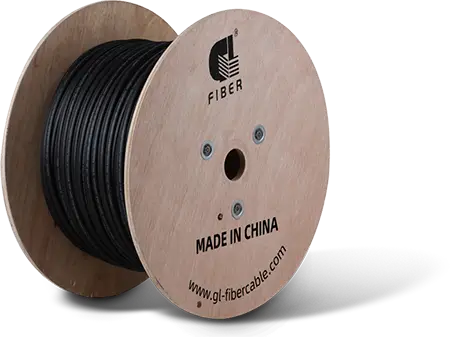
The global fiber optic market is witnessing a historic price explosion. Here's why
G657A2 fiber has become the most sought-after commodity in 2026 and what procurement professionals need to know.
Introduction: The $32/km Reality
If you've sourced drones optical fiber or g657a2 fiber in recent weeks, you've likely experienced sticker shock. Today's market price for G657A2 stands at approximately $32 per kilometer—a figure that seemed unimaginable just months ago. This represents a staggering increase of over 500% from pre-surge levels, creating what industry analysts are now calling a genuine "fiber optic famine" .
At
GL FIBER, with 22 years of experience as a leading Chinese source factory for optical fiber and cable products, we're witnessing this transformation firsthand. Our production lines for G657A2 fiber are running at maximum capacity—2,000 KM per day—yet demand continues to outstrip supply. We currently maintain limited inventory for urgent customer needs, but the pressure on global supply chains shows no signs of abating.
This article analyzes why prices have skyrocketed, examines the trajectory toward stabilization, and provides actionable procurement advice for navigating this challenging market.
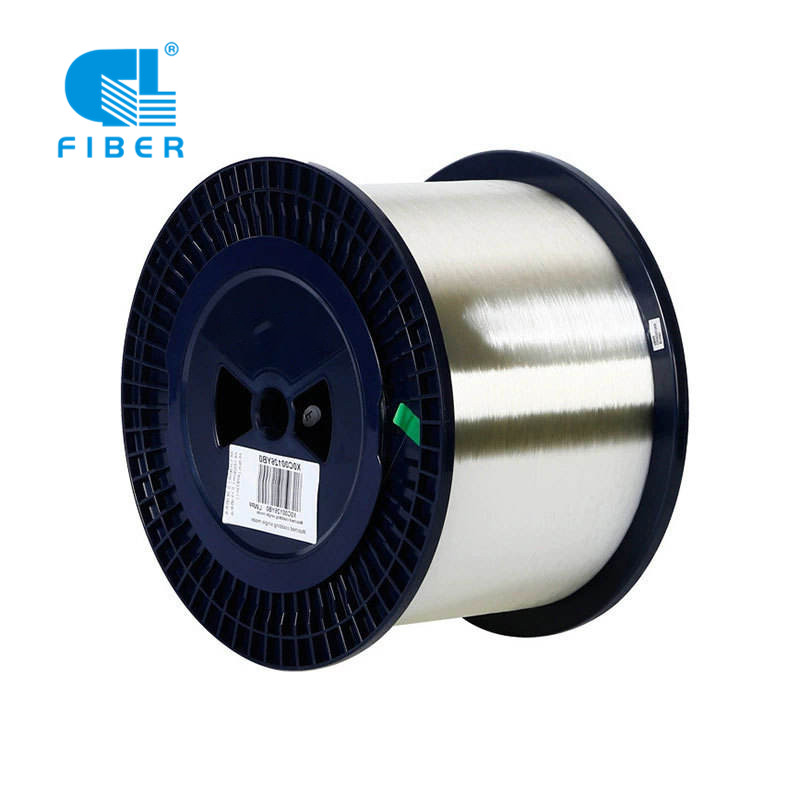
Part 1: The Price Explosion—By the Numbers
Let's begin with hard data. According to recent market analysis from Open Securities, the price trajectory for single-mode fiber products has been nothing short of extraordinary :
Fiber Type Pre-Surge Price (Jan 2026) Current Price (March 2026) Price Increase
G.652.D ¥18/km ¥85–120/km +650%
G.657.A1 ¥23/km ¥115–135/km +487%
G.657.A2 ¥35/km ¥210–230/km +557%
Converted to U.S. dollars at current exchange rates,
G657A2 price now hovers around $32 per kilometer—a level that has shattered all historical records . More importantly, this is not typical seasonal fluctuation. The magnitude and speed of this increase indicate fundamental structural shifts in the market .
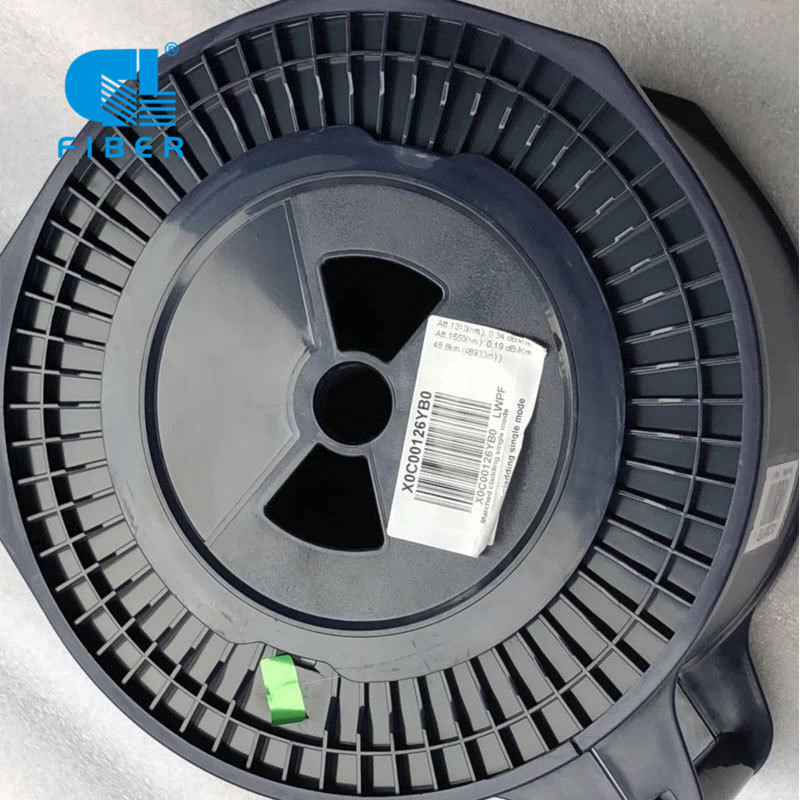
Part 2: Why the "Fiber Optic Famine"? Three Drivers of the Perfect Storm
Understanding why g657a2 fiber has become so scarce requires examining three converging demand drivers and two critical supply constraints.
Demand Driver #1: AI Data Center Explosion
Artificial Intelligence has fundamentally rewritten the demand curve for optical fiber. Hyperscale AI data centers—the kind training massive language models and powering cloud AI services—consume exponentially more fiber than traditional facilities .
A single 10,000-GPU cluster requires tens of thousands of fiber kilometers for internal connections alone . Industry projections indicate that AI-driven fiber demand will grow from less than 5% of the global market in 2024 to a staggering 35% by 2027 .
This shift specifically benefits the
G.657 series. Both
g657a1 fiber and g657a2 fiber are preferred for data center interconnects due to their superior bending performance, which saves precious space in densely packed server racks .
Demand Driver #2: The FPV Drone Revolution
Simultaneously, an unexpected but massive demand surge has emerged from modern warfare. The ongoing Russia-Ukraine conflict has transformed First-Person View (FPV) drones into essential battlefield tools, and these uncrewed systems rely on drones optical fiber for unjammable, real-time video transmission .
Each drone mission can consume 20–40 kilometers of G657A2 fiber . This is not a niche application—it represents high-volume, consumable demand that didn't exist five years ago . The Chinese Electronics Component Industry Association confirms that G657A2's exceptional bending resistance makes it the core material for FPV drone communication systems .
Recent reports indicate that China and Saudi Arabia recently signed a $5 billion drone agreement, further tightening an already stretched supply chain .
Demand Driver #3: DCI and Telecom Infrastructure
The third leg of the demand stool comes from Data Center Interconnect (DCI) and traditional telecom infrastructure. Major cloud providers—Amazon, Microsoft, Google, and Meta—have committed over $600 billion in combined 2026 capital expenditures, largely directed at AI infrastructure .
Meta's recent $6 billion deal with Corning for AI data center fiber demonstrates the scale of this demand. That single order roughly equals Corning's entire optical communications revenue for 2025 .
Supply Constraint #1: The Preform Bottleneck
If demand explains why prices are rising, supply explains why they're rising so dramatically. The critical constraint lies upstream: optical fiber preforms.
Preforms account for approximately 70% of fiber production costs and represent the most technically challenging part of the supply chain . Expanding preform manufacturing capacity requires 18–24 months and massive capital investment .
Currently, every major global preform manufacturer operates at 100% capacity. China's top four fiber producers run their preform lines at full throttle, as do international manufacturers. There is simply no short-term fix.
Supply Constraint #2: Production Efficiency Penalty
Adding to the pressure, producing g657a2 fiber is inherently less efficient than standard G.652.D. The drawing process for G657A2 requires 10–15% more production time per kilometer due to its precise geometry requirements .
This means that as manufacturers shift production to meet G657A2 demand, they effectively reduce total industry output capacity—creating a self-reinforcing supply crunch .
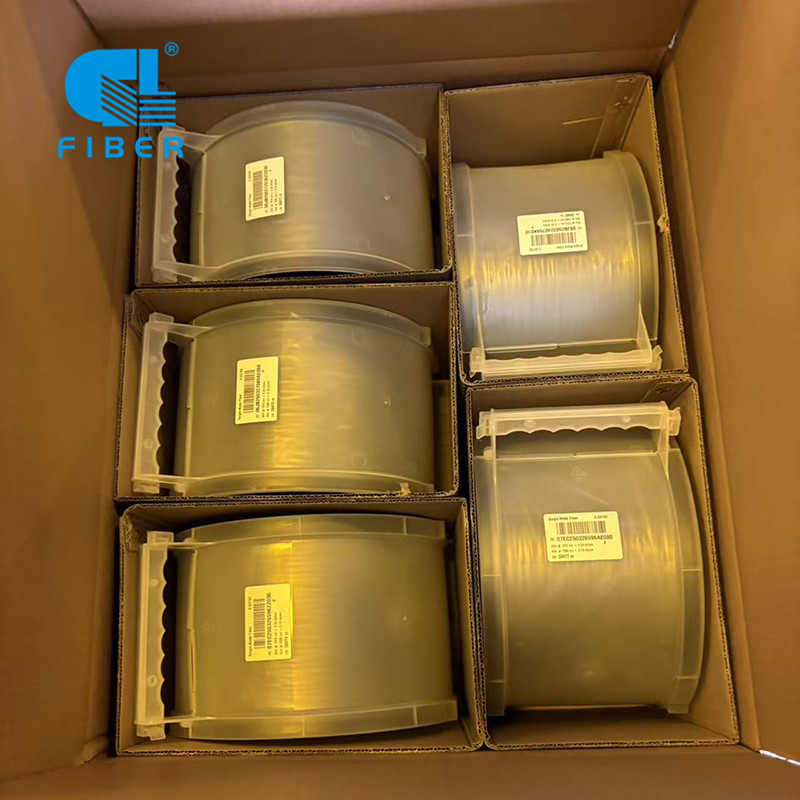
Part 3: When Will Prices Stabilize?
The question every procurement professional is asking: When will the g657a2 price trend toward normalcy?
Based on current data and supply chain analysis, here's our outlook:
Short-Term (Q2 2026): Continued Ascent
Prices will likely climb further in coming months. Major telecom tenders are entering the market, and with manufacturers at full capacity, securing production slots requires significant premiums . The "one price per day" phenomenon—where quotes expire within 24 hours—will persist .
Medium-Term (Q3–Q4 2026): High Plateau
While the rate of increase may moderate, meaningful price declines are unlikely this year. The preform bottleneck cannot resolve quickly. New production lines announced today won't come online until late 2027 at the earliest .
Long-Term (2027 and Beyond)
Analysts project that supply-demand dynamics may begin balancing in late 2027 as capacity expansions take effect . However, even after correction, prices will likely settle above pre-surge levels, reflecting structural demand increases from AI and defense applications .
Part 4: The GL FIBER Advantage—Capacity When You Need It Most
In a market defined by scarcity, reliability becomes the most valuable currency. For 22 years, GL FIBER has stood as a pillar of the Chinese fiber optic industry—a true source factory with complete integration from preform to finished cable.
Our Current Production Strength
While others struggle to secure allocations, GL FIBER maintains robust production:
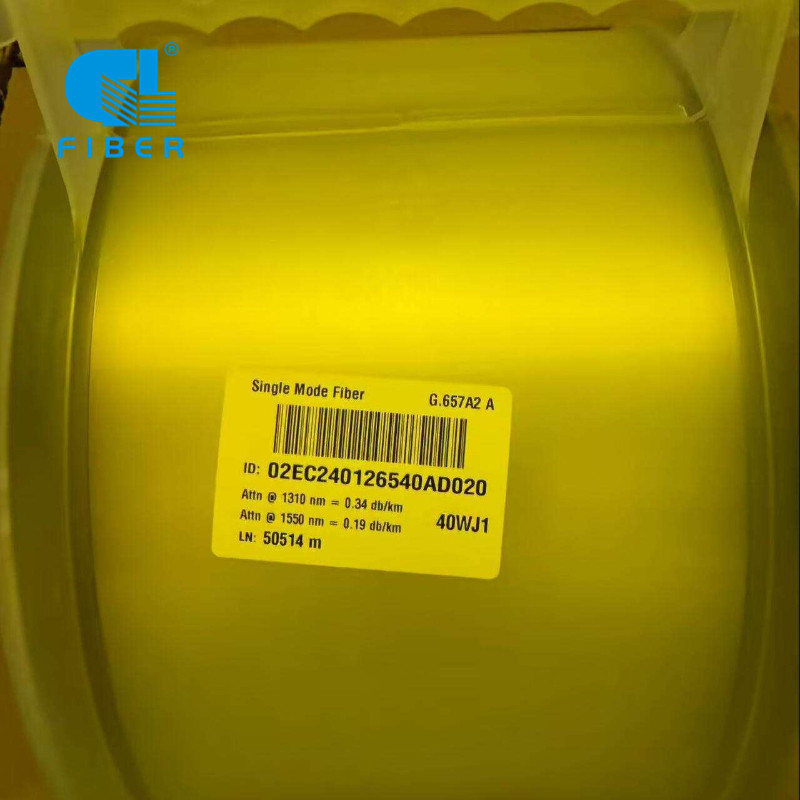
Massive G657A2 Capacity: 2,000 KM/DAY production capability for g657a2 fiber
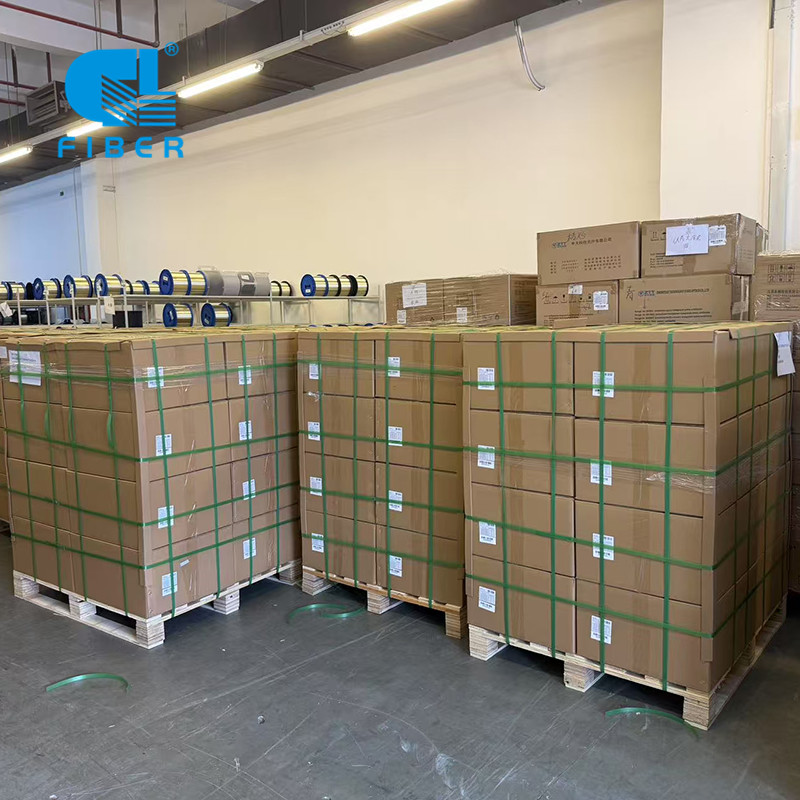
Limited Inventory Available: Strategic stock ready for immediate dispatch to qualified customers
Rapid Delivery: Capable of fulfilling 100,000 km within 15 days for urgent requirements
Proven Track Record: 22 years of manufacturing excellence serving global clients
Full Customization Services
We understand that "one size fits all" doesn't work in specialized cabling. GL FIBER supports comprehensive OEM/ODM customization:
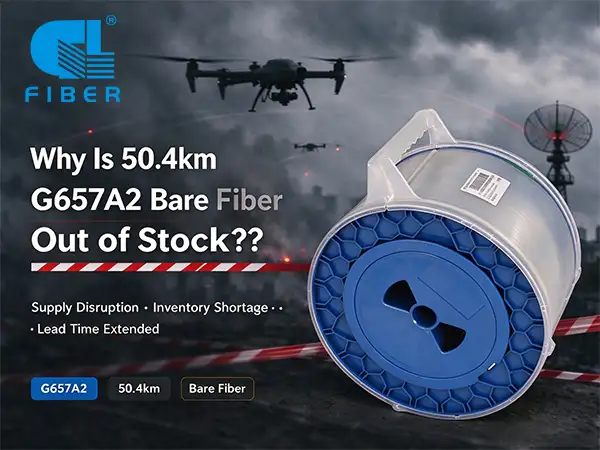
Core Diameter: Multiple options including
0.25mm, 0.27mm, and custom specifications
Winding Length: Precise lengths from
50.4km, 60.4km, or your exact requirements
Color Coding: Custom jacket colors for easy field identification
Packaging: Tailored spools, reels, and export packaging
Branding: Private labeling with your logo and company colors
Our 22 years of experience mean we understand not just how to manufacture fiber, but how to deliver solutions that meet your specific project needs.
Part 5: Strategic Procurement Advice for 2026
Based on our market analysis and daily conversations with global buyers, here is data-driven advice for navigating this challenging environment:
1. Act Now—Don't Speculate
Waiting for prices to return to historical lows is a high-risk strategy. With AI and defense demand showing no signs of abating, the $32/km g657a2 price may represent the "new normal" for the medium term . Securing stock now hedges against further increases.
2. Lock in Long-Term Capacity
Spot buying is the most expensive approach in today's market. Negotiate frame contracts with reliable manufacturers to secure production capacity and buffer against daily fluctuations .
3. Partner with Source Factories
In shortage economies, factories prioritize direct clients. Working with a true source factory like GL FIBER eliminates middlemen markups and provides visibility into actual production schedules .
4. Build Strategic Buffer Inventory
For organizations with ongoing fiber requirements, building buffer stock makes economic sense. Weigh holding costs against the risks of further price increases, extended lead times, and project delays .
5. Maintain Specification Flexibility
If you have critical projects, remaining flexible on secondary specifications (color, packaging, exact length) can help secure available stock faster from existing inventory .
Conclusion: Navigating the Fiber Optic Famine
The global fiber optic market has entered uncharted territory. The convergence of AI data center build-outs, FPV drone demand, and structural supply constraints has created a genuine "fiber optic famine" with g657a2 price increases exceeding 500% .
For procurement professionals, this means higher costs and longer lead times. But it also means that securing a reliable, high-capacity partner is more important than ever.
With 22 years of manufacturing experience, 2,000 KM/DAY production capacity, and limited inventory ready for immediate shipment, GL FIBER stands ready to support your projects through this challenging cycle. Our ability to deliver 100,000 km within 15 days and support full customization—from core diameter to private labeling—makes us the partner you can count on when supply is tight.
Don't let the fiber famine delay your projects. Contact GL FIBER today for real-time availability, firm quotes, and reliable supply.



 ADSS Fiber Optic Cable
 OPGW Optical Ground Wire
 Bare Conductor
 Communication Optical Fibre
 Polarization-maintaining Fiber
 Aerial Fiber Cable
 Duct Fiber Cable
 Direct Buried Fiber Cable
 FTTH Drop Cable
 Air Blown Micro Cable
 Armored Fiber Optic Cable
 High Density Ribbon cable
 Biologically Protective Cable
 FTTX Tactical Cable
 Indoor Fiber Optic Cable
 Hybrid Fiber Optic Cable
 Fiber Optic Assemblies

 Company Profile
 Development History
 Qualification Honor
 Company Videos
 Exhibiting Overseas
 Our Solution