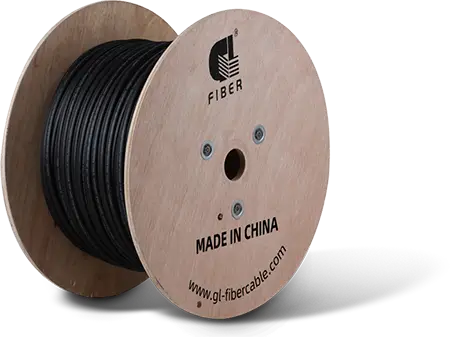
The global fiber optic industry is witnessing an unprecedented crisis—and opportunity. Today,
single-mode fiber prices have skyrocketed to $27 USD per kilometer, marking a staggering increase of over 500% from early 2025 levels. What's driving this historic rally, and when will prices stabilize?
The Perfect Storm: Why Fiber Prices Are Exploding
If you've sourced optical fiber in the past three months, you've likely experienced sticker shock. The market has transformed from a buyer's paradise to a seller's fortress almost overnight. Single mode fiber prices in the Chinese market—the global benchmark—have surged from approximately 16 yuan ($2.33 USD) per kilometer in January 2025 to over 40 yuan ($5.83 USD) by early 2026, with spot market prices now reaching 50 yuan ($7.30 USD) or more . That's a minimum 150% increase in local currency, and with today's export prices hitting $27 USD per kilometer, international buyers are feeling the crunch even harder due to currency fluctuations.
But these figures tell only part of the story. The reality is far more dramatic: some specialized
g 657a2 fiber grades have seen price multiples of 4x to 5x, with availability becoming the primary concern over cost . This isn't merely inflation—it's a structural realignment that industry analysts are calling the most significant since the dot-com era.
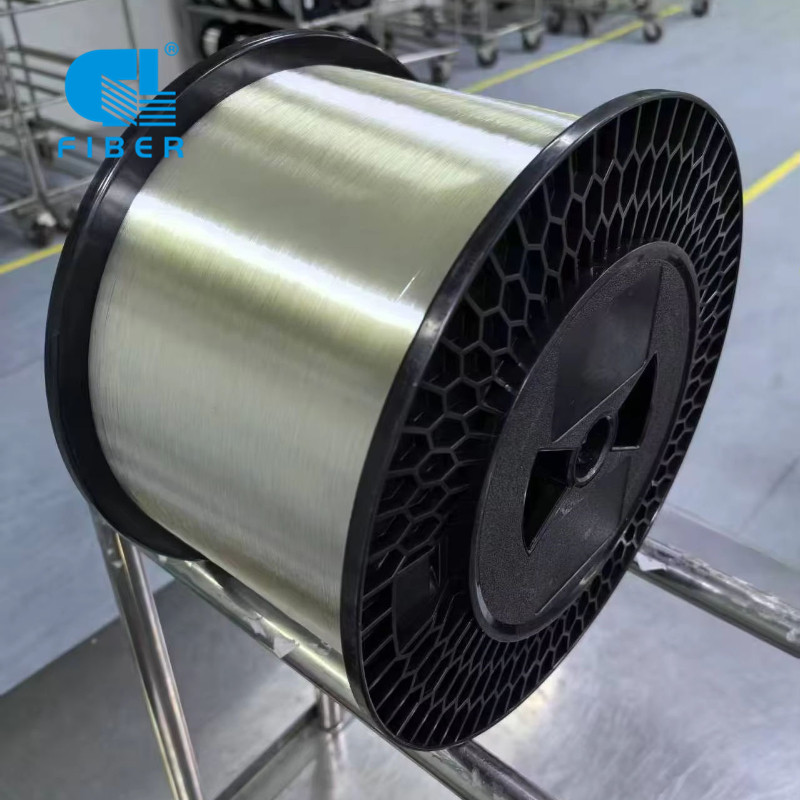
So why is this happening? Three catastrophic demand vectors are colliding with immovable supply constraints.
The Three Drivers of the Fiber Famine
1. AI Data Centers: The Insatiable Beast
The rise of generative AI and hyperscale computing has rewritten the rulebook for bandwidth consumption. Unlike traditional telecommunications infrastructure, AI data centers require massive amounts of single mode fiber for internal cluster connections and Data Center Interconnect (DCI).
A single "million-card" GPU cluster can consume tens of thousands of fiber kilometers . According to Guotai Junan Securities, AI-driven data center fiber demand is projected to grow from less than 5% of global consumption in 2024 to an astonishing 35% by 2027 . This isn't linear growth—it's exponential.
The scale is mind-boggling. Meta's recent $6 billion agreement with Corning for AI data center cabling alone equals Corning's entire 2025 optical communications revenue . When tech giants are locking in supply at this magnitude, smaller buyers are left scrambling for leftovers.
2. FPV Drones: The Unexpected Game-Changer
Perhaps the most surprising demand surge comes from an unexpected source: modern warfare. In the Russia-Ukraine conflict, fiber-optic tethered drones have emerged as a game-changing technology, immune to electronic jamming and capable of precision strikes at distances up to 40 kilometers .
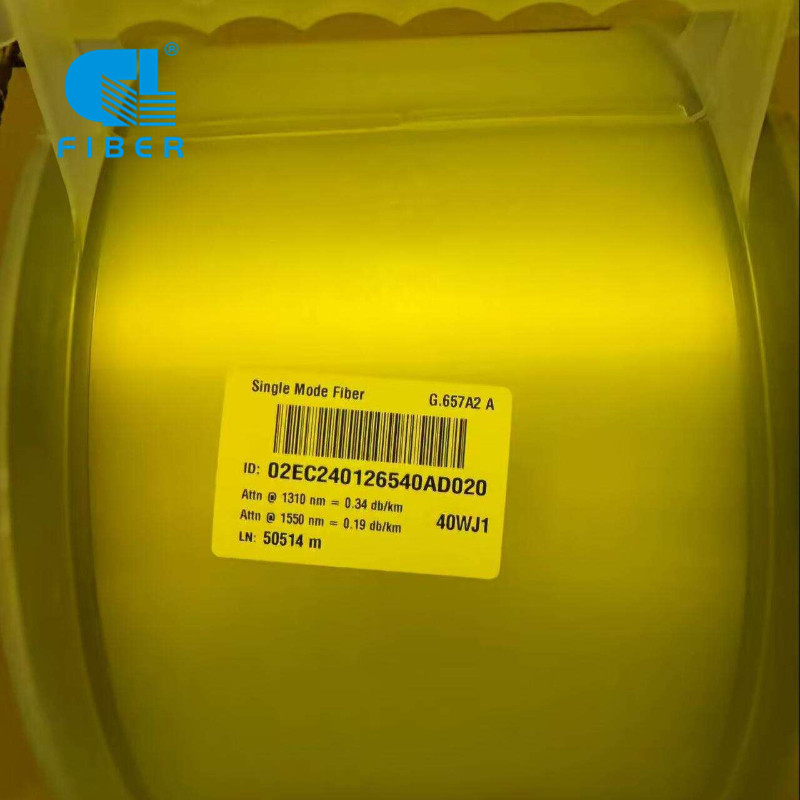
These First-Person View (FPV) drones spool out ultra-thin bare optical fiber as they fly. The fiber of choice? G657A2 fiber, prized for its exceptional bend resistance that allows compact spooling on small drones while maintaining signal integrity in harsh battlefield conditions .
The numbers are staggering. Russia and Ukraine together consume an estimated 50-60 million kilometers of
fiber optic drones cable annually—roughly 10% of global production . Russia's only domestic optical fiber factory in Saransk was damaged by Ukrainian drone strikes in April-May 2025 and remains offline, making China the indispensable supplier .
Vedomosti reports that Russian military demand has driven Chinese fiber cable prices from 16 yuan to 40 yuan in just one year—a 150% increase—with some spot markets seeing 400% spikes . This isn't a niche market anymore; it's a major demand center consuming massive manufacturing capacity.
3. Production Inefficiency: The Hidden Supply Killer
Here's something many buyers don't realize: G657A2 fiber is significantly harder to produce than standard
G.652.D. Its specialized bend-insensitive design requires 10-15% slower drawing speeds, meaning the same production line produces less fiber per hour .
As manufacturers prioritize higher-margin specialty fibers for AI and defense applications, they're forced to allocate more production time to g 657a2 fiber, inadvertently squeezing supply of standard bare optical fiber and creating ripple effects throughout the market .
When Will Prices Stabilize? The Hard Truth
The question every buyer is asking: when will this nightmare end? The answer requires understanding the fundamental bottleneck.
Fiber preforms are the constraint. These glass rods from which fiber is drawn require 18-24 months to expand production capacity, with significant technical barriers . Global preform lines are currently running at 100% capacity . Even if manufacturers started expanding today, new capacity wouldn't come online until late 2027 at the earliest.
CRU Group, the industry's leading independent authority, confirms that "the margin for imbalance appears narrower than in recent years" and that "price direction is now closely linked to preform availability" . With AI infrastructure investment accelerating and defense applications showing no signs of slowing, structural tightness is likely to persist through 2026 and into 2027.
Some analysts suggest prices may moderate slightly as the market finds a new equilibrium, but a return to 2024 levels is virtually impossible given the fundamental demand shift. We're not in a cycle—we're in a new era.
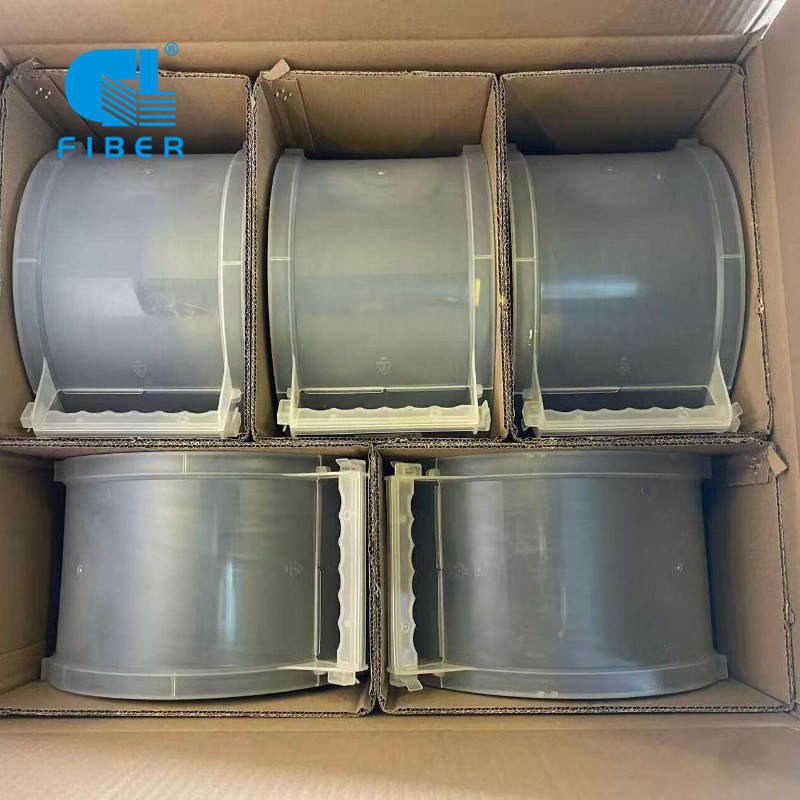
GL FIBER: Your Strategic Partner in a Supply-Constrained World
In a market where delivery delays can halt your production lines, supplier reliability becomes your most valuable asset.
GL FIBER stands apart as a beacon of stability.
22 Years of Manufacturing Excellence
As a Chinese source factory with over two decades of experience, GL FIBER has weathered every market cycle the industry has thrown at us. We're not traders or intermediaries—we're the manufacturers. Our long-standing relationships with raw material suppliers ensure stable preform access even during global shortages.
Unmatched Production Capacity
While competitors struggle to secure production slots, GL FIBER delivers:
-
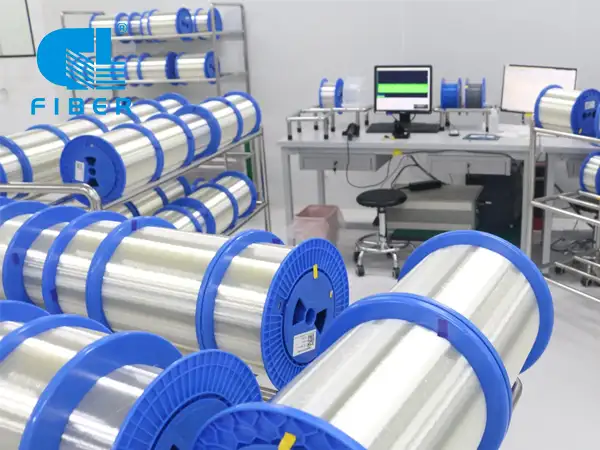
G657A2 fiber production capacity: 2,000 KM per day
-
Express delivery capability: 100,000 km within 15 days
-
Limited stock available now for immediate shipment
Complete Customization Capabilities
We understand that one size doesn't fit all. GL FIBER offers comprehensive customization options:
-
Fiber diameters: 0.25mm, 0.27mm, and custom specifications
-
Custom shaft lengths to minimize your splicing waste
-
Custom colors for easy identification in complex networks
-
Custom outer packaging branded to your specifications
-
Private labeling with your logo and company information
Whether you need bare optical fiber for cable manufacturing or finished single mode fiber cables for deployment, our 22 years of expertise ensure consistent quality and reliable delivery.
Strategic Procurement Advice for 2026
Based on current market dynamics and extensive industry data, here's how successful buyers are navigating the fiber famine:
1. Abandon Just-in-Time Ordering
The era of ordering fiber when you need it is over. Production slots are fully booked months in advance. Waiting for spot availability guarantees project delays. Establish blanket orders or forecasts with reliable suppliers to secure capacity .
2. Lock in Prices Immediately
With prices changing weekly and the market firmly in sellers' territory, delaying purchases by even a week can cost thousands. The 500% increase we've witnessed isn't speculation—it's reality . Engage with manufacturers like GL FIBER who offer transparent pricing and rapid execution.
3. Prioritize Vertically Integrated Suppliers
The bottleneck is at the preform level. Suppliers without their own preform capacity are the first to run dry. With 22 years of backward integration, GL FIBER ensures consistent preform supply, guaranteeing our high output remains uninterrupted .
4. Diversify Your Fiber Portfolio
If you rely solely on standard grades, you're competing with every other buyer in the market. Consider qualifying G657A2 fiber for more applications. Its superior bend performance future-proofs your networks while potentially offering better availability through specialized suppliers.
5. Build Strategic Partnerships
This isn't a market for transactional relationships. Buyers who treat suppliers as partners—sharing forecasts, committing to volumes, maintaining communication—get priority when allocations tighten. GL FIBER values long-term relationships and rewards loyal customers with consistent access.
The Bottom Line
The fiber optic industry has entered a new paradigm defined by AI infrastructure and defense technology convergence. The "fiber famine" is real, structural, and likely to persist through 2026 and beyond . Standard
single mode fiber prices have surged over 500%, g 657a2 fiber for fiber optic drones is consuming massive manufacturing capacity, and supply cannot respond quickly due to preform constraints.
For companies seeking reliable access to high-quality bare optical fiber, G657A2 fiber, or complete single mode fiber solutions, the time to act is now. Waiting for prices to "return to normal" means waiting until 2028—and missing critical opportunities in between.
GL FIBER stands ready as your manufacturing partner. With 22 years of experience, 2,000 KM daily production capacity, 100,000 km/15-day delivery capability, and complete customization options, we offer the stability and speed the current market demands.
Contact GL FIBER today to discuss your volume requirements, secure your supply chain, and navigate the fiber famine with confidence.



 ADSS Fiber Optic Cable
 OPGW Optical Ground Wire
 Bare Conductor
 Communication Optical Fibre
 Polarization-maintaining Fiber
 Aerial Fiber Cable
 Duct Fiber Cable
 Direct Buried Fiber Cable
 FTTH Drop Cable
 Air Blown Micro Cable
 Armored Fiber Optic Cable
 High Density Ribbon cable
 Biologically Protective Cable
 FTTX Tactical Cable
 Indoor Fiber Optic Cable
 Hybrid Fiber Optic Cable
 Fiber Optic Assemblies
 Company Profile
 Development History
 Qualification Honor
 Company Videos
 Exhibiting Overseas
 Our Solution