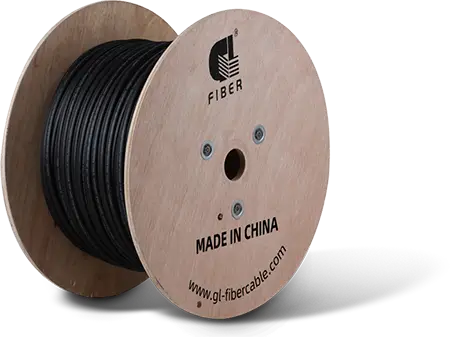
The FPV fiber market is booming. Fiber-optic guided drones—immune to electronic jamming—have become essential in modern defense applications, with each mission consuming 20–40 kilometers of specialized optic bare fiber. The market for fiber optic guided drones is projected to reach approximately **$2.3 billion in 2026** and grow to $4.5 billion by 2036.
But where demand surges, fraud follows.
Optical fiber prices have skyrocketed.
G.657.A2 fiber has surged from approximately 32 CNY per core-kilometer to 240 CNY over the past year—an increase of up to 650%. G.652.D single-mode fiber prices climbed from under 20 CNY to 83.4 CNY per core-kilometer in March 2026, a cumulative increase of over 400%. Major Chinese manufacturers now have orders booked through Q1 2027.
In this environment, unscrupulous suppliers are selling
G.657.A1 fiber labeled as G.657.A2—and buyers are discovering the hard way that their drones fail in the field.
This article explains why A1 cannot replace A2 for FPV drone applications, how to verify what you are buying, and what GL FIBER recommends for safe procurement.
The Critical Difference: A1 vs A2
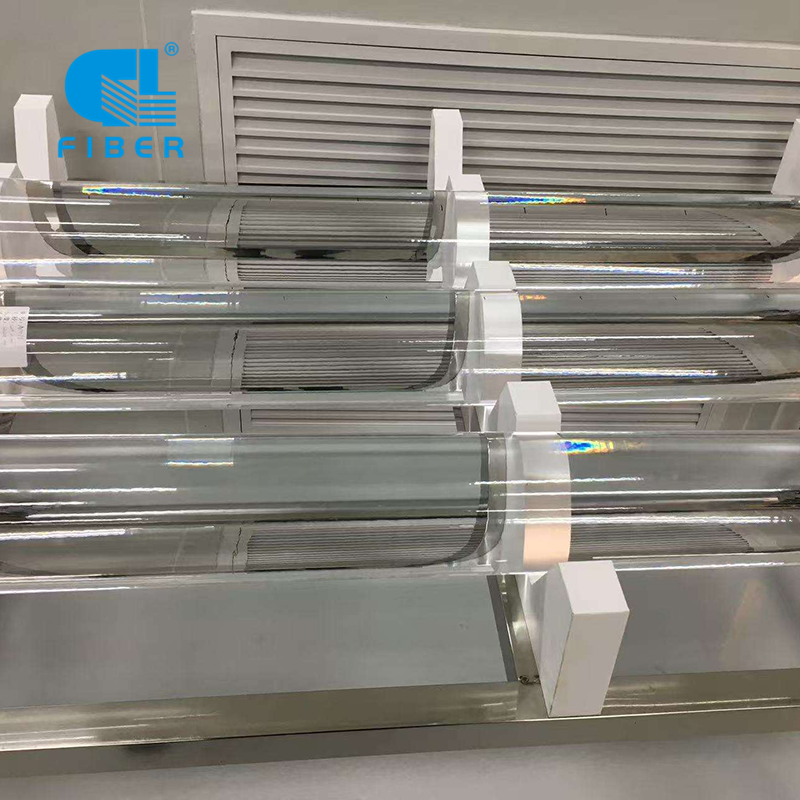
G.657.A1 and G.657.A2 may look identical, but their performance under ultra thin fiber conditions is dramatically different.
Parameter
G.657.A1 (Fake "A2") G.657.A2 (Genuine) Why It Matters
Minimum Bend Radius 10 mm 7.5 mm A2 handles 25% tighter bends
Macrobending Loss (1550nm, 15mm radius) ≤ 0.25 dB ≤ 0.03 dB A2 has ~88% lower loss in tight bends
Compatibility with G.652.D Fully compatible Fully compatible Both can be spliced to existing networks
Typical Application FTTH, cabinets, riser cables FPV drones, AI data centers A2 is essential for dynamic, tight-coil applications
Why A1 Fails in Drones?
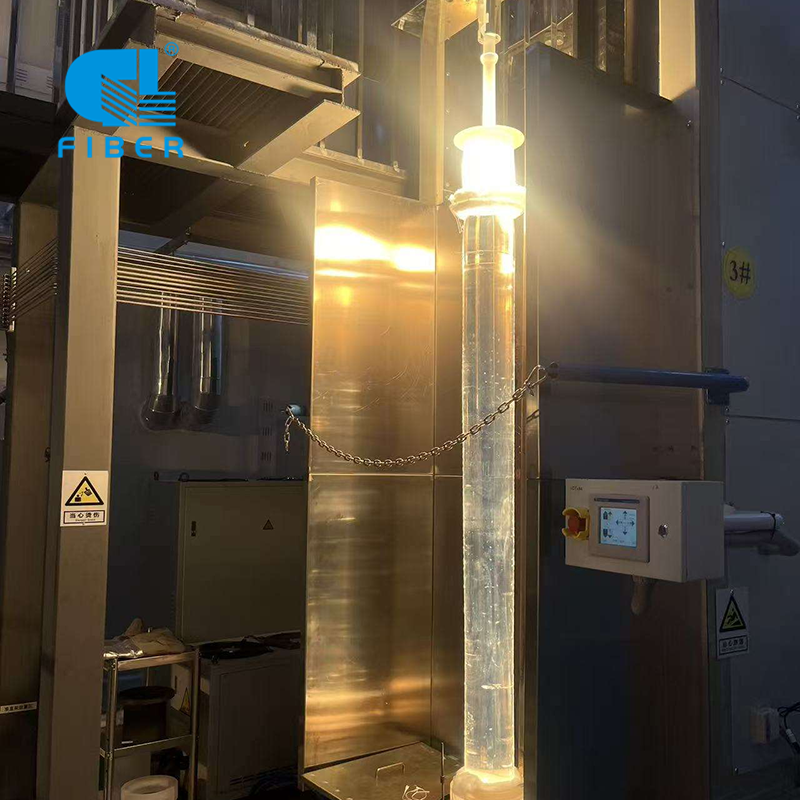
Bare fiber for FPV drones is wound onto small optical fiber spools and rapidly deployed during flight. The fiber undergoes extreme bending, dynamic stress, and tight coiling.
According to the ITU-T G.657 standard, G.657.A1 fibers are appropriate for a minimum design radius of 10 mm, while G.657.A2 fibers are designed for a minimum radius of 7.5 mm. This seemingly small difference—2.5 mm—is critical.
What happens when A1 is used in a drone:
The fiber exceeds its bend limit during spooling or deployment
Signal attenuation spikes at 1550nm and 1625nm
Data transmission degrades or fails mid-flight
The drone loses connection—mission failure
Drone fiber fails most often during dynamic release, not at rest. A1 fiber might pass static lab tests but fail in the field. G.657.A2 is engineered for these dynamic, high-stress conditions.
Current Market Pricing (July 2026)
Fiber Type Application Current Price Range
G.657.A2 FPV Drones, AI Data Centers $26.5–33/km
G.657.A1 FTTH, General Bend-Insensitive $16.50–19.50/km
G.652.D Standard Telecom $12–17/km
GL FIBER pricing: $26.5/km on 50.4km spools – genuine G.657.A2, factory-direct.
⚠️ Red Flag: If a supplier quotes G.657.A2 significantly below $26/km, you are likely being offered A1 or substandard fiber. The price difference of $10–15/km represents real performance differences—not a "deal."
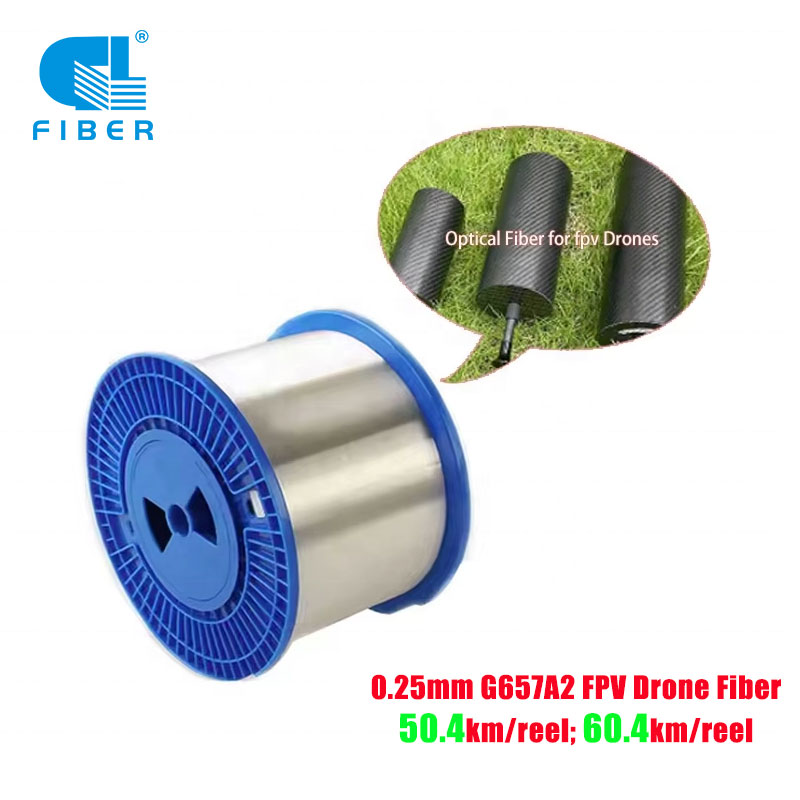
5 Ways to Verify You Are Buying Genuine G657A2 Fiber
1. Demand Macrobending Loss Test Reports
Genuine G.657.A2 fiber must demonstrate ≤0.03 dB loss at 1550nm with a 15mm bend radius (10 turns). At a 7.5mm radius (1 turn), loss should be ≤0.5 dB.
What to ask for: Batch-specific test reports at 1550nm and 1625nm. Do not accept "typical values"—demand data from your actual shipment.
2. Verify ITU-T G.657.A2 Compliance
Legitimate G657a2 Fpv Drone Optic fiber comes with ITU-T G.657.A2 compliance certification.
What to ask for: Certificates that match your shipment's batch number. Cross-reference the manufacturer's name and date.
3. Check Coating Diameter (The "0.25mm" Standard)
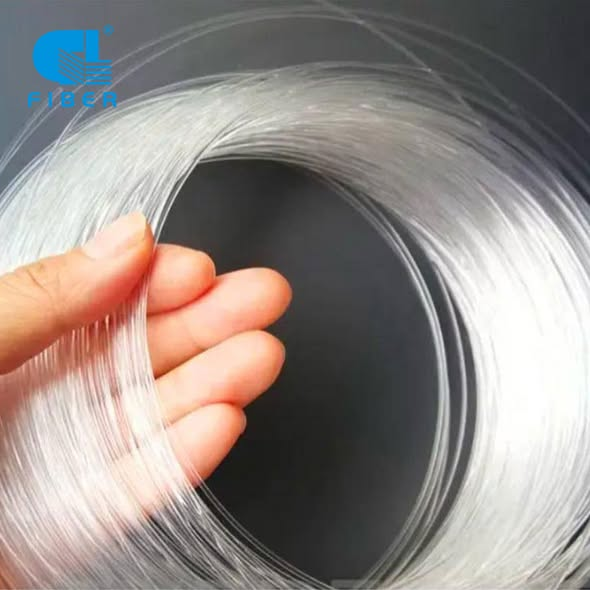
For drone applications, ultra thin fiber typically uses a 0.25mm coating diameter.
Parameter Specification
Cladding Diameter 125 ± 1 μm
Coating Diameter 245 ± 15 μm
Core-Cladding Concentricity ≤ 0.5 μm
Inferior products often have inconsistent coating diameter, leading to winding problems on fiber optic spools.
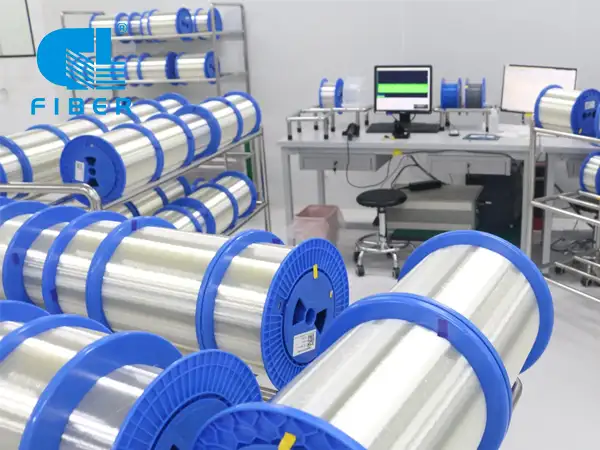
4. Inspect Spool Quality & Winding Tension
What to check:
Consistent winding tension to prevent fiber damage
Undamaged spool flanges
Clear labels with specifications and batch numbers
Practical tip: Ask for a video of the fiber paying off the spool at operational speed.
5. Verify Traceability & Factory Sourcing
What to check:
Every spool should have a unique, traceable batch number
Legitimate suppliers can arrange factory visits or video calls
Red flag: Requests for 100% upfront payment without established relationship
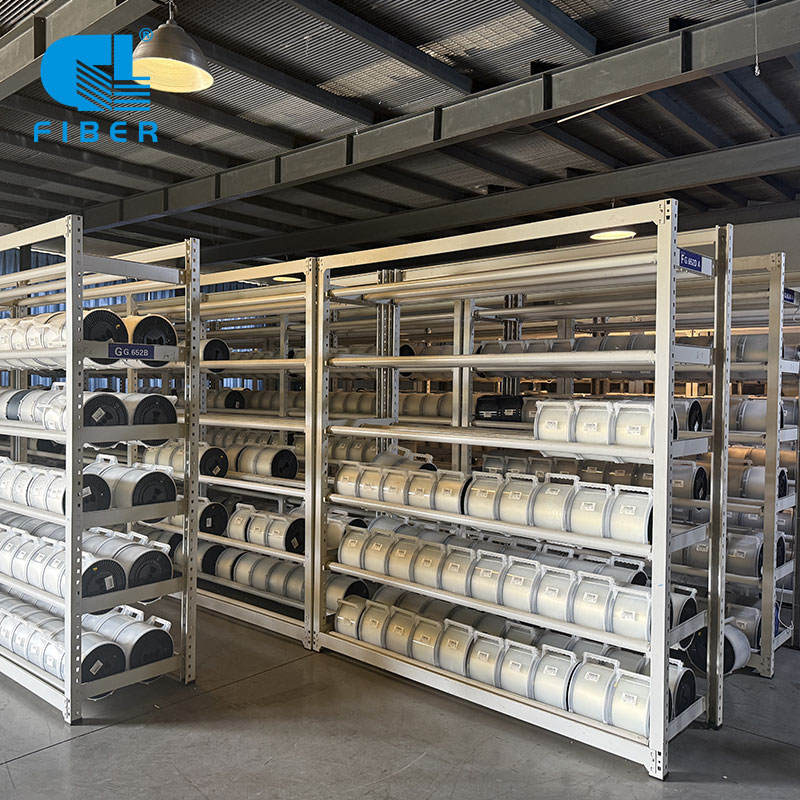
Why Choose GL FIBER?
✅ 22+ years of manufacturing experience – Founded in 2004, we know fiber optics
✅ Source factory – Full control over preform and drawing capacity
✅ Complete transparency – Factory visits and video calls are always welcome
✅ ISO9001, ISO14001, OHSMS18001 certified
✅ Global reach – Serving 200+ countries and regions
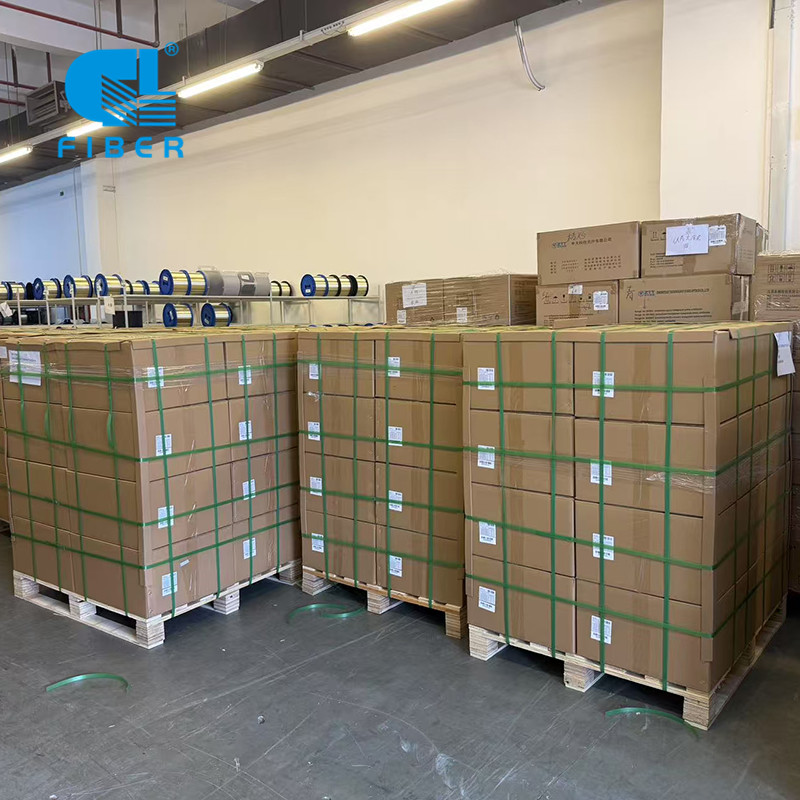
Current G.657.A2 Pricing: $26.5/km on 50.4km spools – genuine, tested, and ready to ship.
Final Word
The
FPV fiber market is hot—and so is the risk of being cheated. G.657.A1 labeled as A2 will fail in drone applications. Don't let a lower price today cost you a mission tomorrow.
Partner with a trusted manufacturer. Verify what you buy. And always demand the test data.



 ADSS Fiber Optic Cable
 OPGW Optical Ground Wire
 Bare Conductor
 Communication Optical Fibre
 Polarization-maintaining Fiber
 Aerial Fiber Cable
 Duct Fiber Cable
 Direct Buried Fiber Cable
 FTTH Drop Cable
 Air Blown Micro Cable
 Armored Fiber Optic Cable
 High Density Ribbon cable
 Biologically Protective Cable
 FTTX Tactical Cable
 Indoor Fiber Optic Cable
 Hybrid Fiber Optic Cable
 Fiber Optic Assemblies
 Company Profile
 Development History
 Qualification Honor
 Company Videos
 Exhibiting Overseas
 Our Solution