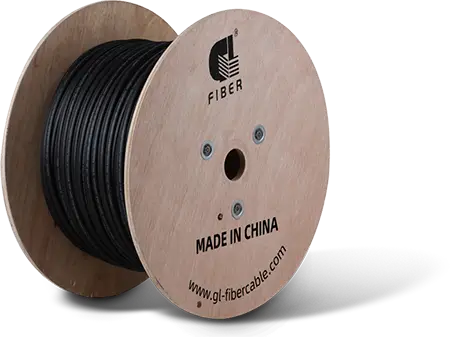
The global fiber optic market is undergoing a historic transformation. If you are sourcing
g657a2 50.4 km fiber optic for FPV drone applications, you have likely noticed: prices are climbing, lead times are extending, and counterfeit products are flooding the market.
As a manufacturer of bare fiber and
fiber optical products with over 22 years of experience,
GL FIBER provides this comprehensive market analysis to help you navigate the current landscape—and secure genuine 0.25mm optical fiber for your mission-critical drone programs.
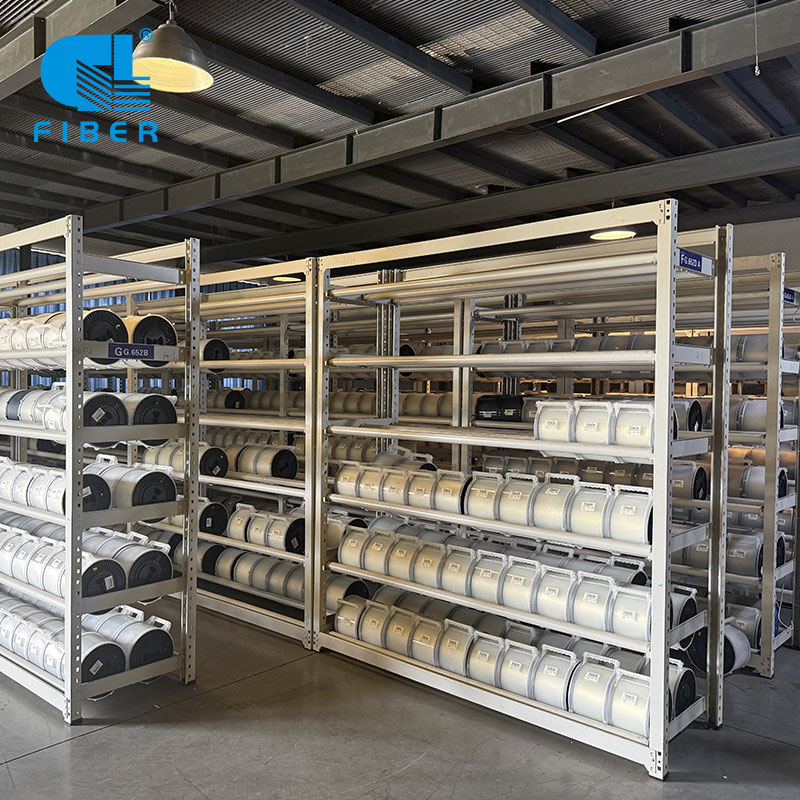
📊 From Preform to Payload: Understanding G657A2 Fiber Production
Before diving into market trends, it helps to understand how
G.657.A2 bare optical fiber is actually made—and why supply is so constrained.
The Preform: The Heart of Every Fiber
Every kilometer of fiber optical cable starts as a glass preform—a cylindrical rod of ultra-pure silica glass. The preform is the single most critical component in fiber manufacturing, accounting for approximately 70% of production costs.
The most advanced preform technology is the RIC® (Rod In Cylinder) process, developed by Heraeus in 2002. This process:
-
Uses RIC® cylinders as the industry standard for single-mode fiber cladding
-
Enables batch sizes exceeding 200 kg—over 7,000 km of fiber per batch
-
Allows combination with Fluorine-doped tubes to manufacture bend-insensitive fibers like G.657.A2
The Problem: Expanding preform capacity takes 18–24 months and requires massive capital investment. No new capacity will come online until late 2027 at the earliest.
From Preform to Fiber: The Drawing Process
Once the preform is assembled, it moves to the draw tower, where:
-
The preform is heated to melting point (approximately 2000°C)
-
Fiber is drawn at speeds exceeding 2,000 meters per minute
-
A dual-layer acrylate coating is applied immediately after drawing
-
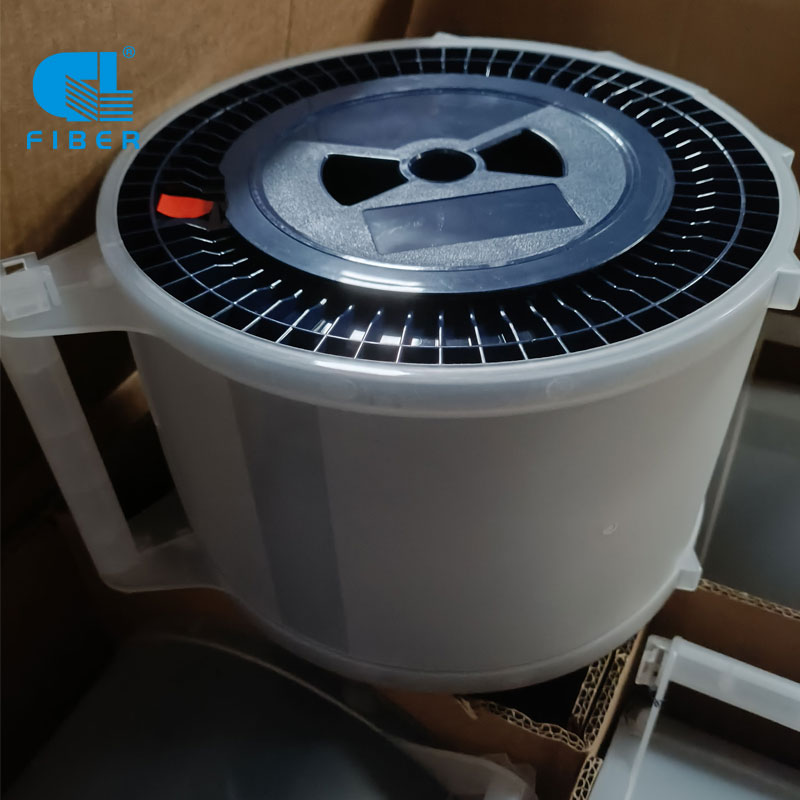
The coated fiber is wound onto optical fiber spools
The G.657.A2 Production Penalty: Producing bend-insensitive G.657.A2 requires 10–15% more production time per kilometer than standard
G.652.D. This is because the more complex refractive index profile requires tighter process control and slower drawing speeds.
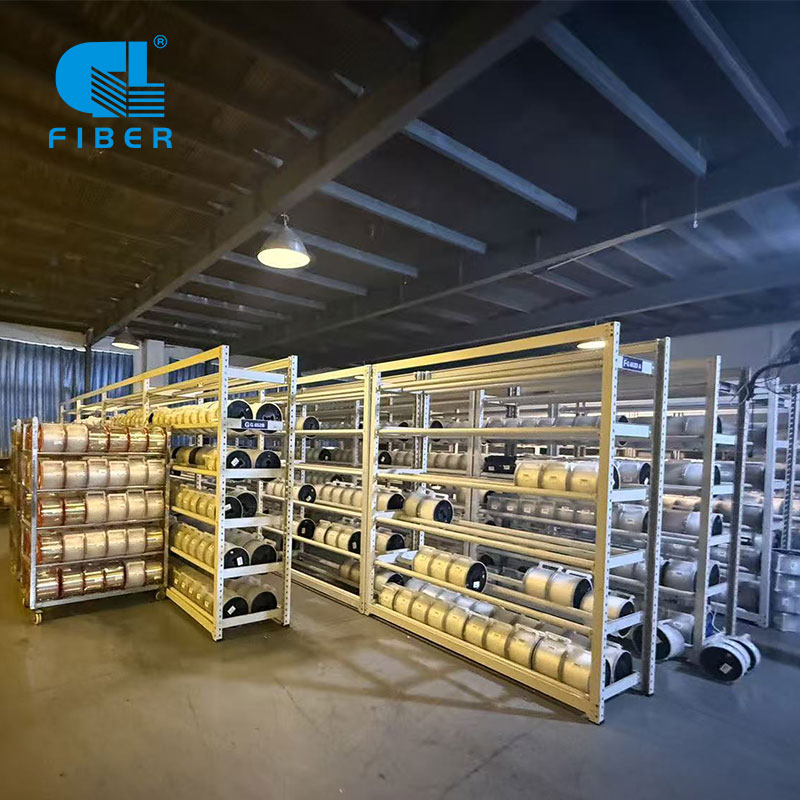
The 200μm vs. 250μm Question
For FPV drone applications, fiber diameter is critical:
-
Diameter Typical Use Weight per km Bend Performance
-
200μm Ultra-light drones, maximum weight savings ~30% lighter than 250μm Excellent
-
250μm (0.25mm optical fiber) Standard FPV drones, balanced durability Standard Excellent
-
270μm Heavy-duty applications, extra durability Heavier Excellent
Most FPV drone manufacturers prefer 0.25mm optical fiber (250μm coating) as it offers the best balance of lightweight performance and mechanical durability for high-speed deployment.
📈 Current Market Demand: What Is Driving the G657A2 Fiber Boom?
1. The FPV Drone Revolution
The most significant demand driver for fpv optical fiber comes from defense and industrial drone applications worldwide.
Key market facts:
-
Each fiber-optic drone mission consumes 20–40 kilometers of specialized bare fiber
-
The fiber is not recovered after deployment—it becomes a consumable product
-
Drone-related fiber demand is approximately 50 million core kilometers annually
According to China Academy of Information and Communications Technology (CAICT) data, the Russia-Ukraine conflict alone consumes an average of nearly 5,000 fiber-optic guided drones daily, resulting in weekly fiber consumption exceeding 100,000 core kilometers—accounting for approximately 15% of global fiber production.
2. The AI Data Center Avalanche
Simultaneously, artificial intelligence infrastructure is consuming fiber at an unprecedented rate:
-
A single GPU cluster requires 5 to 10 times more fiber than traditional data centers
-
AI-driven fiber demand is projected to grow from under 5% of global consumption (2024) to 35% by 2027
-
Major cloud providers have committed over $600 billion in 2026 capital expenditures, mostly for AI infrastructure
3. The Supply Bottleneck
The industry faces a critical supply constraint that cannot be resolved quickly:
Constraint Impact
-
Preform capacity 18-24 months to expand; 100% utilization currently
-
Helium shortage Critical for preform sintering; constrains production
-
G.657.A2 complexity 10-15% slower production than standard fiber
-
Global supply gap 15% of global demand in 2026-2027
-
According to CAICT, as of March 2026, standard single-mode fiber (G.652.D) prices have surged 400% , while G.657.A2 prices have increased by 600%.
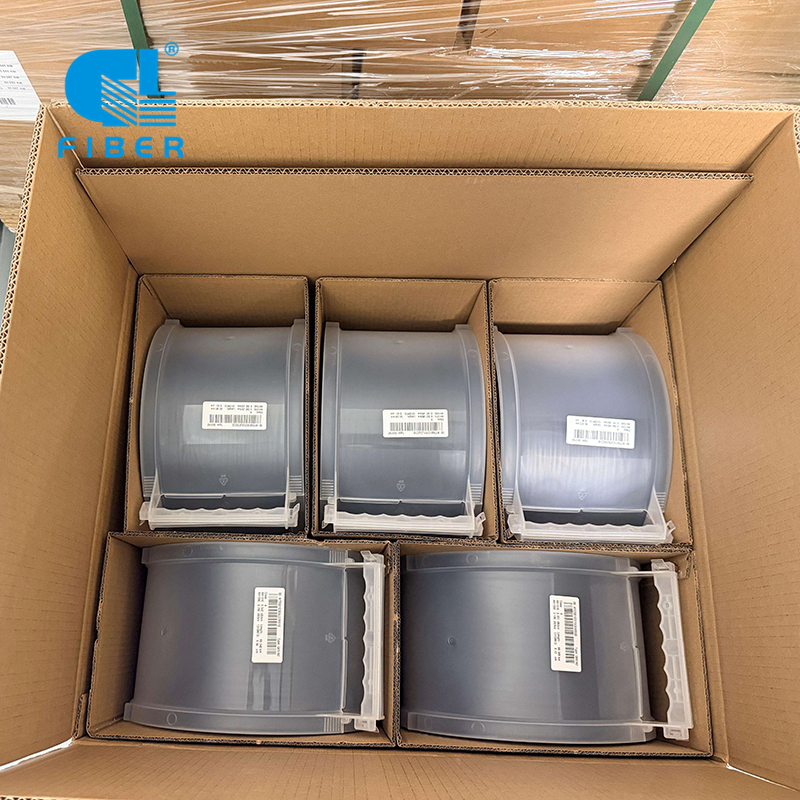
📊 Price Trend Analysis: G657A2, G657A1 & G652D
Based on comprehensive market data from Q1-Q2 2026, here is the current pricing landscape:
Fiber Type Key Application Early 2025 Price Current Market Price (June 2026) Increase
G.652.D (Standard Single Mode) Long-haul telecom, backbone ~$2.60/km $12–$17/km +380–550%
G.657.A1 (Bend-Insensitive) FTTH, general FTTx deployments ~$3.30/km $16.50–$19.50/km +400–490%
G.657.A2 (High-Performance Bend-Insensitive) FPV drones, AI data centers ~$4.80/km $27–$33/km +460–560%
Sources: Industry data, CRU reports, CAICT analysis
GL FIBER Current Pricing
At GL FIBER, our g657a2 50.4 km fiber optic is priced at $26/km for 50.4km/reel quantities on 250μm (0.25mm optical fiber) —positioned competitively while maintaining the highest quality standards.
Competitor Pricing Context
Competitor Market Position Approx. G.657.A2 Pricing Lead Time Status
-
YOFC (长飞) Largest Chinese manufacturer ~$33-35/km Booked through Q1 2027
-
Hengtong (亨通) Major player, strong exports ~$30-33/km Booked through Q1 2027
-
FiberHome (烽火) State-backed, data center focus ~$30-33/km Limited availability
-
GL FIBER 22-year source factory $26/km (50.4km/reel) Available - contact for allocation
📈 Price Forecast: What to Expect in 2026-2027
According to multiple institutional analyses (CAICT, CSC, CRU):
Timeframe Forecast
-
Q2–Q3 2026 Prices remain elevated; supply remains tight; quotes often expire within 24 hours
-
Q4 2026 Continued pressure on availability; meaningful declines very unlikely
-
2027 New preform capacity may begin entering the market by late 2027—but this is uncertain
-
2028+ A return to 2024 price levels is unlikely given structural demand shifts
-
CRU data shows the global fiber price index climbed to 107.2 in April 2026—the first double-digit monthly increase since 2021.
According to CAICT analysis: "The current market price difference between spot and telecom procurement prices has reached 5–10 times, causing fiber manufacturers to refuse bidding on major procurement projects in Tianjin, Heilongjiang, and Guangdong."
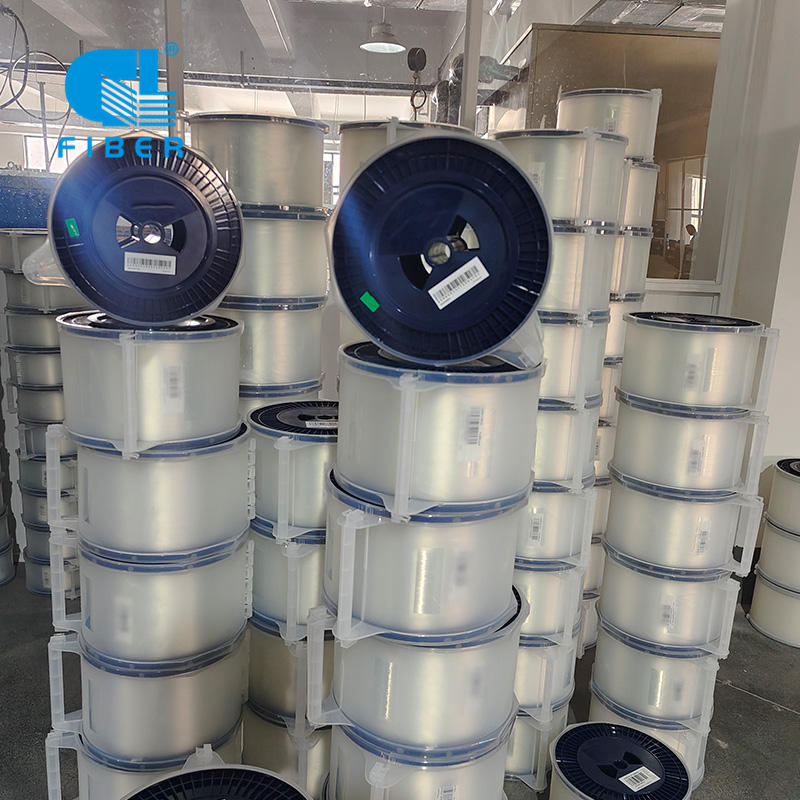
✅ GL FIBER: Your Trusted Source for G657A2 FPV Drone Fiber
Why partner with GL FIBER for your g657a2 50.4 km fiber optic needs?
✅ 22+ years of manufacturing experience – Founded in 2004, we know fiber optics
✅ Source factory with full quality control – We control our own drawing capacity
✅ 550+ employees, 70% in technical and R&D roles – Including 8 PhDs and 30+ Master‘s degree holders
✅ ISO9001, ISO14001, OHSMS18001 certified
✅ 40,000㎡ facility with 20+ automated production lines
✅ Complete transparency – Factory visits and video calls are always welcome
✅ Global reach – Serving 200+ countries and regions
Product Specifications for FPV Drone Applications:
Parameter GL FIBER G.657.A2 Specification
Fiber Type Bend-Insensitive Single-Mode G.657.A2
Coating Diameter 245±10μm (0.25mm optical fiber) or 200μm option
Cladding Diameter 125±0.7μm
Attenuation (1310nm) ≤0.35 dB/km
Attenuation (1550nm) ≤0.21 dB/km
Macrobending Loss (1550nm, 15mm radius, 10 turns) ≤0.03 dB
Macrobending Loss (1550nm, 7.5mm radius, 1 turn) ≤0.5 dB
Proof Test ≥100 kpsi
Spool Length 50.4km per reel (also available: 25.2km, 60.4km)
Operating Temperature -60°C to +85°C
📞 Contact GL FIBER Today
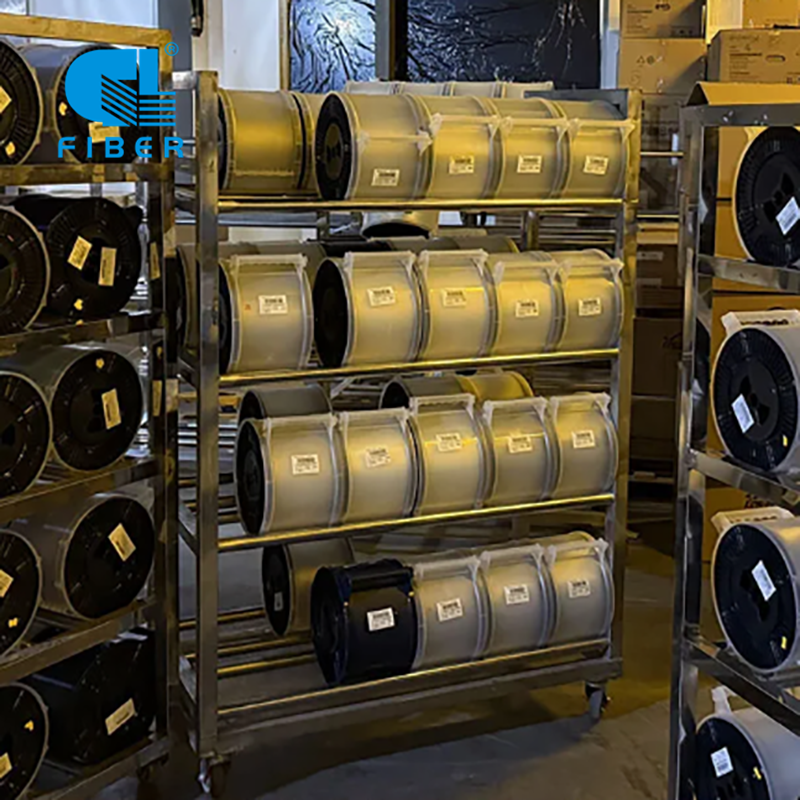
Don’t risk your FPV drone program on counterfeit or substandard fiber. Partner with a trusted manufacturer who stands behind every bare fiber and fiber optical spool we ship.
-
Website: www.gl-fibercable.com
-
Product: G.657.A2 Bare Optical Fiber, 200μm/250μm, 50.4km/reel
-
Current Pricing: $26/km for 50.4km quantities
-
Factory Location: Changsha, Hunan, China
Let GL FIBER shine all over the world. Light the world, one connection at a time.



 ADSS Fiber Optic Cable
 OPGW Optical Ground Wire
 Bare Conductor
 Communication Optical Fibre
 Polarization-maintaining Fiber
 Aerial Fiber Cable
 Duct Fiber Cable
 Direct Buried Fiber Cable
 FTTH Drop Cable
 Air Blown Micro Cable
 Armored Fiber Optic Cable
 High Density Ribbon cable
 Biologically Protective Cable
 FTTX Tactical Cable
 Indoor Fiber Optic Cable
 Hybrid Fiber Optic Cable
 Fiber Optic Assemblies
 Company Profile
 Development History
 Qualification Honor
 Company Videos
 Exhibiting Overseas
 Our Solution