If you are sourcing
G657A2 bare fiber for UAV FPV drone tethers, you have likely experienced the frustration firsthand: lead times have stretched from weeks to months, quotes from Chinese factories are valid for only days, and some suppliers now require deposits just to hold production capacity. This is not a temporary logistics hiccup. It is the result of a structural collision between explosive new demand and a supply chain that physically cannot expand fast enough.
This article breaks down the real reasons behind the
G657A2 fiber optic shortage in China, examines the price trajectory with hard data, and provides actionable procurement guidance for buyers of SM fiber and bare fiber spools used in drone applications.
The Demand Shock: Two Unstoppable Forces
AI Data Centers Are Devouring Fiber Capacity
The primary driver of the current fiber tightness is not telecommunications. It is artificial intelligence. In 2026, global cloud providers’ capital expenditure on computing infrastructure exceeded $886.7 billion, and AI data centers’ share of fiber demand in North America surged from under 30% in 2025 to over 70% this year . A single ultra-large AI computing center now requires 5 to 10 times more fiber than a traditional data center .
Crucially for
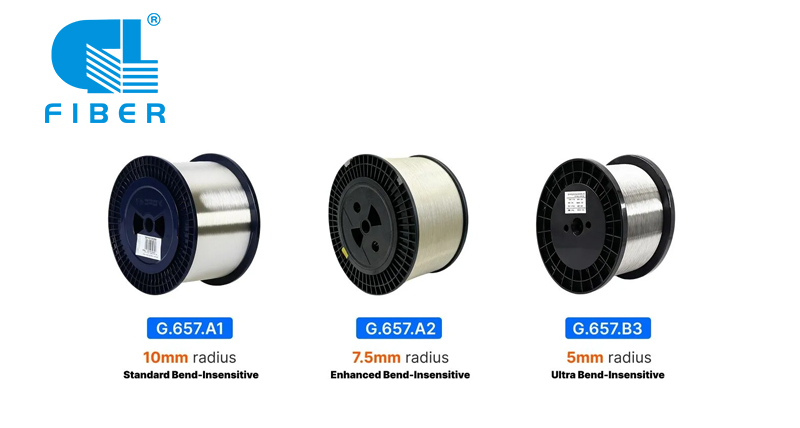
G657A2, AI data centers favor bend-insensitive fibers for high-density cabling in confined spaces. The same physical properties that make G657A2 bare fiber ideal for tight routing inside GPU racks also make it the fiber of choice for drone tethers. When data center demand exploded, it began pulling supply away from every other application.
Fiber-Optic Drones: A New and Insatiable Demand Category
The second shock is specific to the UAV FPV sector. In electronic warfare environments where radio frequencies are jammed, fiber-optic drones have emerged as a reliable alternative. A typical fiber-optic FPV drone deploys 10 to 40 kilometers of fiber during a single mission, and that fiber is a one-time consumable . Russia alone is projected to produce 4 to 5 million drones in 2026, each requiring kilometers of g657a2 fiber optic .
This demand category did not exist at scale two years ago. It arrived suddenly, and it targets precisely the same product grade—0.25mm or 0.27mm
G657A2 bare fiber on spools—that data centers are also scrambling to secure.
The Supply-Side Reality: Why Factories Cannot Simply “Make More”
Optical Preform: The 18-to-24-Month Bottleneck
Every optical fiber begins as an optical preform, a high-purity glass cylinder that accounts for roughly 70% of total fiber cost and 70% of industry profit . Building a new preform facility with 3,500-ton capacity requires approximately 4 billion RMB and a construction timeline of 18 to 24 months .
This means that even if every major manufacturer broke ground on new preform plants today, meaningful additional supply would not reach the market until late 2027 or 2028. As of October 2026, China’s effective preform capacity utilization rate stood at 84.3%, with North American facilities exceeding 95% . There is virtually no slack in the system.
Capacity Reallocation: G657A2 Gets Priority, But Not Enough
When preform is scarce, manufacturers allocate it to the highest-value products. G657A2 preform now commands 160 RMB per equivalent core-kilometer, up nearly 550% from 22–30 RMB at the start of 2025 . Producers have shifted 30% to 40% of their capacity toward specialty fibers like G657A2 .
Yet the math remains brutal. Global demand for G657-class fibers in 2026 is estimated at 370 million core-kilometers, while China’s effective capacity for these grades is only 200 to 210 million core-kilometers—a gap of approximately 46% . No amount of prioritization can close a gap of that magnitude.
The Helium Constraint
An often-overlooked bottleneck is helium. Preform sintering requires helium gas for heat conduction, and global helium supply has been tight. Chinese manufacturers have mitigated this by increasing domestic helium recovery rates above 50%, with targets to reach 80%, but the constraint has still limited output at marginal producers .
Price Trends: What the Data Shows
The price movement in G657A2 fiber has been nothing short of historic.
Period
G657A2 Bare Fiber Price (RMB/core-km)
Source
-
Early 2025 ~32 Industry reports
-
January 2026 83 2026 Global Fiber & Cable Report
-
June 2026 216.91 2026 Global Fiber & Cable Report
-
Late 2026 (spot) ~240 Multiple industry sources
-
2027 Forecast 220–250 Industry forecast
In overseas markets, G657A2 fiber spot prices have reached $21 to $25 per core-kilometer—two to three times the Chinese domestic benchmark . The price surge is not a speculative bubble; it reflects genuine scarcity.
Industry forecasts suggest the global fiber supply-demand gap will widen to 150–200 million core-kilometers in 2027. While new capacity will begin to alleviate the shortage after 2028, G657A2 specifically is not expected to see meaningful relief until 2029 or later .
Practical Procurement Guidance for G657A2 Buyers
Given this market environment, purchasing g657a2 bare optical fiber requires a different approach than the transactional buying of previous years. Here are concrete recommendations based on current market conditions.
1. Accept That Price Validity Windows Are Short
Quotes that remain valid for 30 days are now the exception, not the norm. Many Chinese factories are issuing quotes valid for 3 to 7 days, and some are pricing on a “market-linked” basis at the time of shipment. Build this volatility into your budgeting. If you are planning a production run three months out, assume a 10–20% upward adjustment from today’s spot price and secure budget approval accordingly.
2. Distinguish Between “Available” and “Actually in Stock”
The market has seen an influx of traders offering G657A2 fiber at seemingly attractive prices. Much of this is either (a) material that does not meet full G657A2 bend-insensitivity specifications, or (b) product that has not yet been produced, with delivery contingent on the trader securing allocation from a factory.
For UAV applications, where fiber failure means losing the aircraft, do not compromise on specification. Request the factory’s test data for macrobend loss at 10mm radius and verify that the supplier is an actual manufacturer or an authorized distributor, not a middleman.
3. Lock In Allocation with Deposits, Not Just Purchase Orders
Multiple reports confirm that buyers now pay deposits simply to reserve factory capacity . A purchase order without a deposit carries little weight in the current allocation queue. If you have a confirmed production schedule for Q1 or Q2 2027, negotiate a capacity reservation agreement now. The deposit secures your position; waiting until you need the fiber will mean paying spot prices that may be significantly higher.
4. Consider Spool Configuration as a Cost Lever
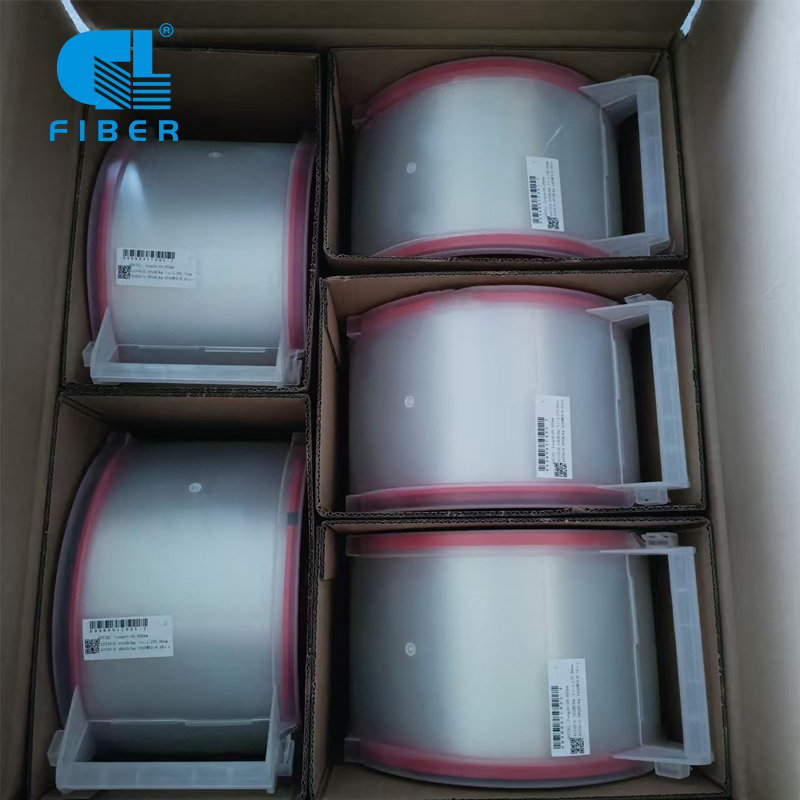
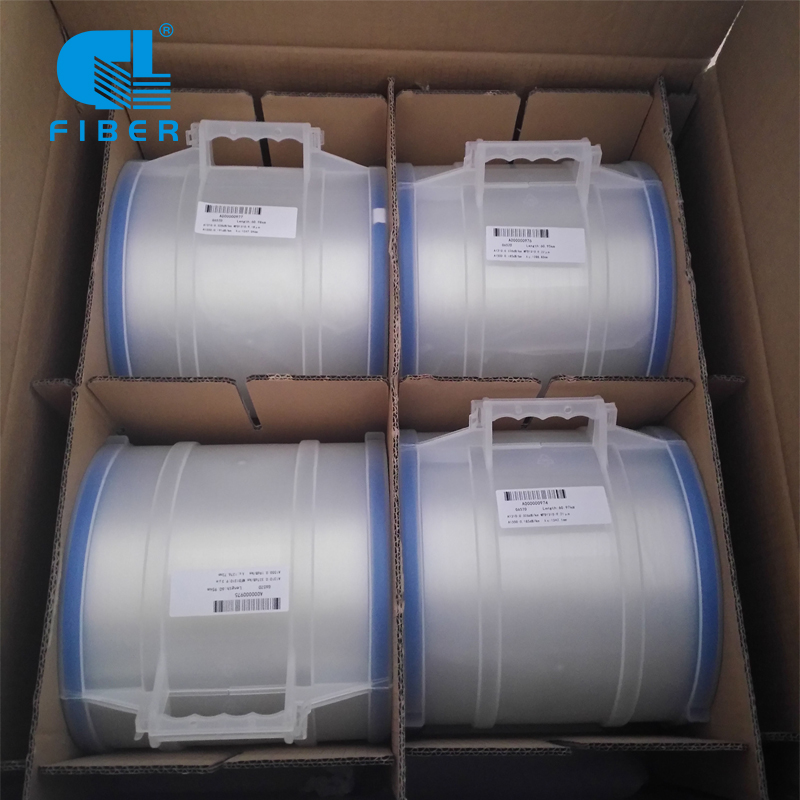
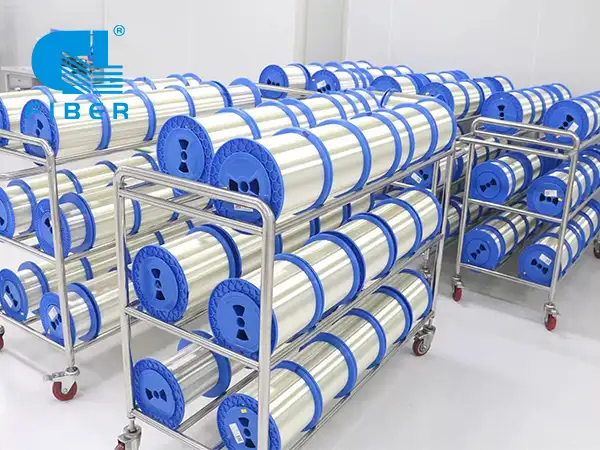
Our G657A2 bare fiber spools are available in 0.20mm, 0.25mm, and 0.27mm diameters, with standard spool lengths including 25.2km, 50.4km, and 60km. For drone tether applications, the 0.25mm diameter offers an optimal balance of tensile strength and weight. If your extrusion or connectorization process allows, standardizing on the 50.4km spool rather than smaller configurations reduces per-unit packaging and handling costs, and factories may prioritize larger spool orders in allocation decisions.
5. Verify Quality at the Source, Not at the Port
With demand this high, some factories are running lines at maximum speed with reduced sampling frequency. Before your shipment leaves China, request third-party verification of key parameters: attenuation at 1310nm and 1550nm, macrobend loss at 10mm radius, and cladding diameter consistency. The cost of a pre-shipment inspection is trivial compared to the cost of deploying substandard fiber in a drone fleet.
6. Build Relationships Beyond the Spot Market
The buyers who will fare best through 2027 are those who move beyond transactional purchasing. If you have a predictable annual volume, discuss a framework agreement with your supplier that covers both current pricing and future allocation priority. Factories are more willing to prioritize customers who can demonstrate stable, recurring demand rather than one-off spot purchases. This is especially relevant for SM fiber buyers who can consolidate G657A2 orders with other fiber purchases.
The Bottom Line
G657A2 bare fiber is difficult to buy in China today because the global fiber industry is experiencing its most severe supply-demand imbalance in over a decade. AI data centers and fiber-optic drones have created simultaneous demand shocks, while the optical preform bottleneck imposes a physical limit on how quickly supply can respond. Prices have risen more than 600% from early 2025 levels, and relief is not expected before 2029 for this specific fiber grade.
For UAV FPV manufacturers, the practical response is clear: secure allocation early, verify quality rigorously, and treat fiber procurement as a strategic supply chain function rather than a commodity purchase. The market will eventually rebalance, but in the interim, the buyers who plan ahead will be the ones who keep production running.
GL FIBER manufactures G657A2 bare optical fiber spools specifically for UAV FPV drone applications, available in 0.20mm, 0.25mm, and 0.27mm diameters. For current pricing and allocation availability, contact our sales team directly.



 ADSS Fiber Optic Cable
 OPGW Optical Ground Wire
 Bare Conductor
 Communication Optical Fibre
 Polarization-maintaining Fiber
 Aerial Fiber Cable
 Duct Fiber Cable
 Direct Buried Fiber Cable
 FTTH Drop Cable
 Air Blown Micro Cable
 Armored Fiber Optic Cable
 High Density Ribbon cable
 Biologically Protective Cable
 FTTX Tactical Cable
 Indoor Fiber Optic Cable
 Hybrid Fiber Optic Cable
 Fiber Optic Assemblies
 Company Profile
 Development History
 Qualification Honor
 Company Videos
 Exhibiting Overseas
 Our Solution