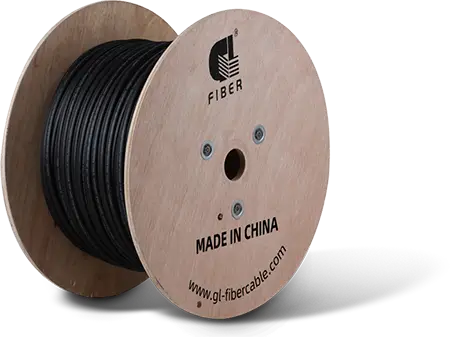
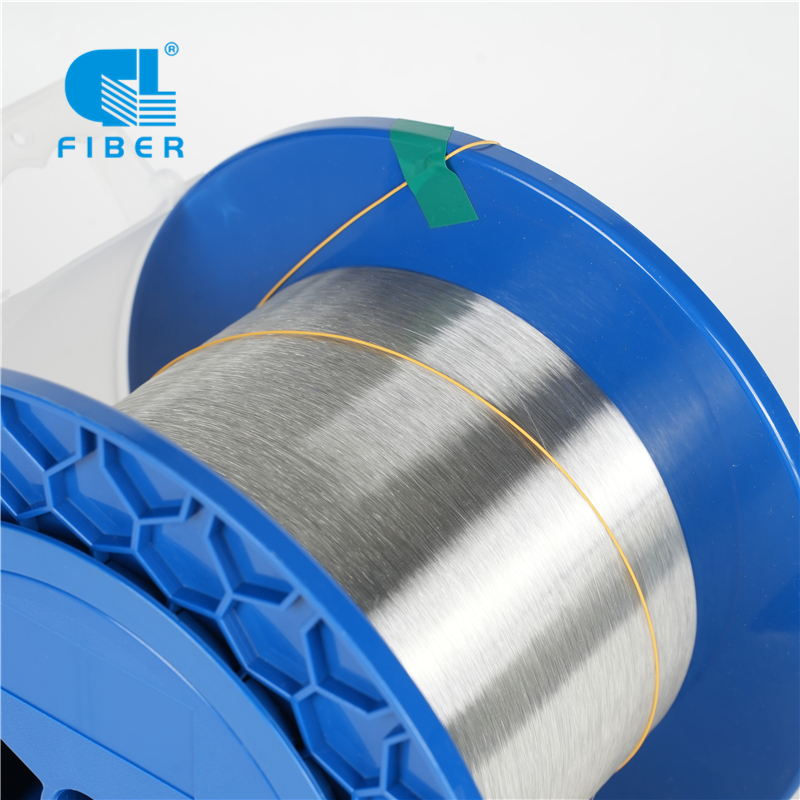
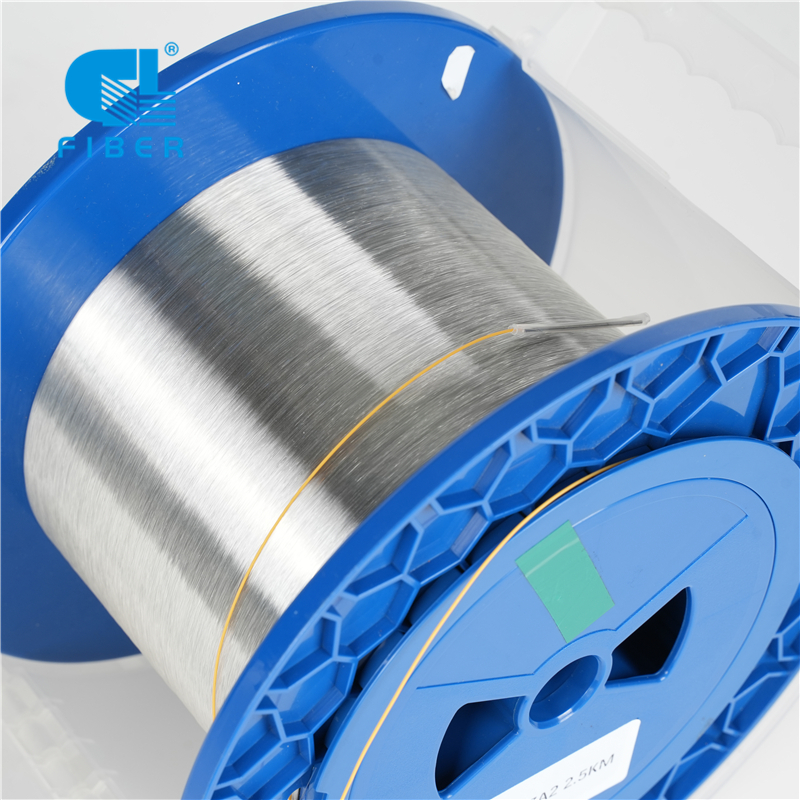
The global market for drone optical fiber has entered unprecedented territory. If you are sourcing FPV fiber optic or G657A2 fiber for drone applications, you have likely noticed: prices are climbing, lead times are extending, and supply is tighter than ever.
As of May 2026,
G.657.A2 fiber is trading at approximately
$26~28/km – a dramatic increase from just months ago. For procurement professionals searching for optical fiber spool, fiber optic for drones, or fiber optic drone cables Ukraine, understanding the current market dynamics is essential.
This article analyzes market demand (with a special focus on Ukraine), price trends, and provides technical guidance on purchasing and testing
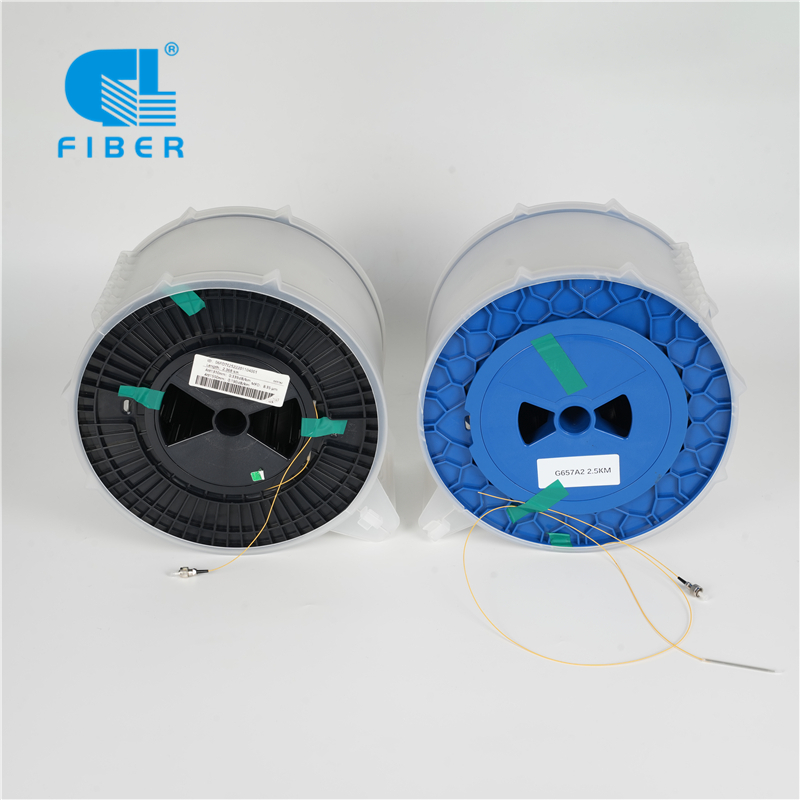
G657A2 FPV fiber.
📊 Current Market Overview: Why Is Drone Fiber in Such High Demand?
1. The FPV Fiber Optic Revolution
Fiber-optic guided FPV drones are immune to electronic jamming – a critical advantage in modern defense environments. Unlike traditional radio-controlled drones, these systems spool out a thin bare optical fiber tether during flight, providing:
-
Jam-proof communication – no RF signals to intercept
-
High-bandwidth video – real-time HD feedback
-
Stealth operation – undetectable by RF scanners
-
Each mission consumes 20–40 kilometers of specialized drone fiber, and because the fiber is not recovered, this represents pure consumable demand.
2. Ukraine Market Demand
The Ukraine market has become a significant demand center for
fiber optic drone cables Ukraine and FPV cable products.
Key data points:
-
Combined Russian and Ukrainian fiber-optic drone consumption reached 50–60 million kilometers in 2025
-
Ukraine has enacted tax and customs incentives for domestic drone manufacturers, including import duty and VAT exemptions on optical fiber components
-
Ukraine remains heavily dependent on imported raw fiber, primarily from China
The Supply Challenge:
Ukrainian drone units are now competing for fiber capacity with AI hyperscalers like Meta, Microsoft, and Google – companies with AI capital expenditure budgets measured in tens of billions of dollars.
3. The AI Data Center Demand
Simultaneously, AI infrastructure is consuming fiber at an unprecedented rate:
-
A single GPU cluster requires 5–10 times more fiber than traditional data centers
-
AI-driven fiber demand is projected to grow from under 5% of the global market (2024) to 35% by 2027
-
Corning signed a $6 billion fiber supply deal with Meta in early 2026
Why
G.657.A2 is the preferred fiber for both applications:
Superior bend resistance (bending radius as low as 7.5mm) allows winding onto tiny spools without signal loss
Essential for high-density AI data center cabling and compact
FPV drone spools
📈 Price Trends: G657A2, G657A1 & G652D
Based on market data from April–May 2026, here is where prices currently stand:
Fiber Type Key Application Jan 2026 Price Current Price (May 2026) Increase
-
G.652.D Standard Telecom ~$2.60/km (¥18) $12–17/km (¥85–¥120) +380–550%
-
G.657.A1 FTTH, General Bend-Insensitive ~$3.30/km (¥23) $16.50–19.50/km (¥115–¥135) +400–490%
-
G.657.A2 FPV Drones, AI Data Centers ~$5/km (¥35) $26–28/km (¥180–¥190) +500–560%
Sources: Industry market data, April–May 2026
Key observations:
-
G.657.A2 fiber price has led the surge, with spot quotes reaching $26–28/km
-
According to Chinese media reports, G.657.A2 prices have risen from 32 CNY/km to 190 CNY/km – a 650% increase
-
Four major Chinese fiber vendors are now running at 100% capacity
Why Are Prices Still Rising?
The Preform Bottleneck:
Fiber optic preforms account for approximately 70% of production costs
Expanding preform capacity requires 18–24 months due to complex chemical deposition processes
Every major global preform manufacturer is currently at full capacity
The G657A2 Production Penalty:
Producing G.657.A2 fiber requires 10–15% more production time per kilometer than standard G.652.D
As manufacturers shift lines to meet urgent A2 demand, overall industry output becomes constrained
Supply-Demand Gap:
CRU (Commodity Research Unit) estimates the global supply-demand gap will reach 15% in 2026-2027 – a deficit unseen in nearly a decade
🔧 Purchasing G657A2 Fiber: What to Check
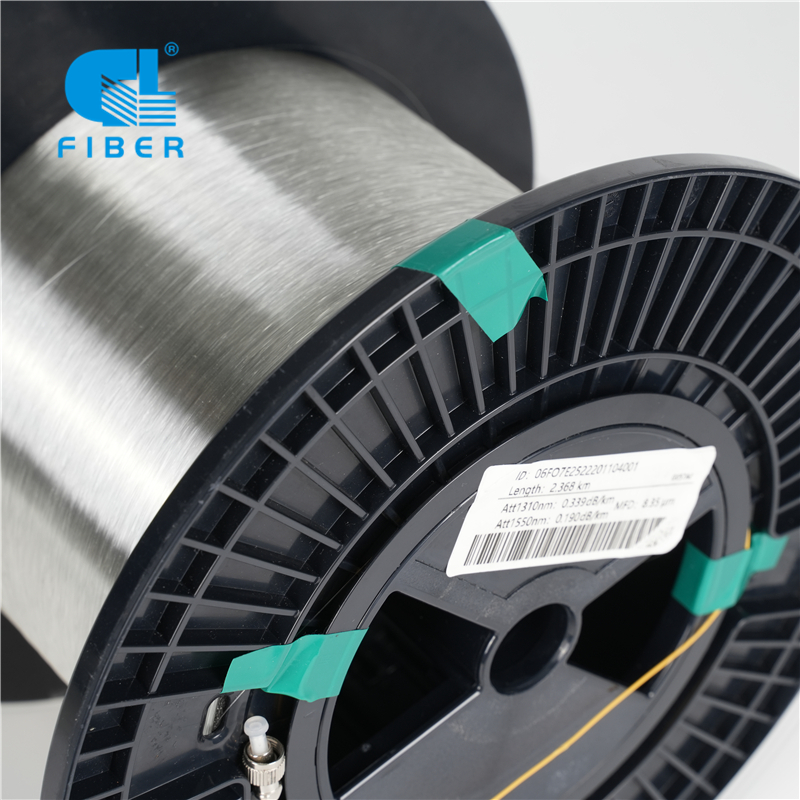
When sourcing bare optical fiber or FPV optical fiber for drone applications, pay attention to the following critical parameters:
1. Bending Performance (Macrobend Loss)
This is the most important specification for drone applications.
Standard Requirement (ITU-T G.657.A2):
Bending loss at 7.5mm radius (1 turn): ≤0.5dB at 1550nm and 1625nm
Why it matters: The fiber must maintain signal integrity when wound tightly onto small spools and during rapid deployment.
2. Attenuation Coefficient
Wavelength Maximum Attenuation (G.657.A2)
-
1310nm ≤0.36 dB/km
-
1550nm ≤0.22–0.30 dB/km
-
1625nm ≤0.30 dB/km
-
Sources: Industry standards
3. Geometric Specifications
Parameter Standard Requirement
Cladding diameter 125 ± 0.7 μm
Coating diameter 242 ± 5 μm (0.25mm nominal)
Core/cladding concentricity error ≤0.5 μm
Cladding non-circularity ≤0.7%
*Source: ITU-T G.657.A2 standard*
4. Mechanical Specifications (For Spooled Fiber)
Parameter Requirement
Proof test level ≥100 kpsi (690 MPa) or higher for drone applications
Operating temperature -60°C to +85°C
Spool quality Smooth winding, no crossing, appropriate tension
5. Supplier Verification
Red flags to watch for:
Inability to provide factory visits or video calls
No batch traceability or test reports
Requests for 100% upfront payment without established relationship
🧪 Testing G657A2 Fiber: Key Procedures
Based on industry standards (IEC 60793, ITU-T G.650), here are the essential tests for drone optical fiber:
1. Optical Performance Testing
Test Method Acceptance Criteria
Attenuation OTDR or cut-back method per IEC 60793-1-40 ≤0.36 dB/km @1310nm; ≤0.22-0.30 dB/km @1550nm
Macrobend loss 1 turn around 7.5mm mandrel ≤0.5dB @1550nm and 1625nm
Chromatic dispersion Phase shift method Comply with ITU-T G.652
2. Geometric Testing
Test Method Acceptance
Cladding diameter Gray scale/CCD imaging 125 ± 0.7 μm
Coating diameter Non-contact measurement 242 ± 5 μm
Core/clad concentricity Centering measurement ≤0.5 μm
3. Mechanical Testing
Test Method Criteria
Proof test Tensile stress application ≥100 kpsi (690 MPa)
Dynamic fatigue (n-value) Two-point bending or tensile >20 for G.657.A2
Coating strippability Mechanical stripping force Clean removal, no residue
4. Environmental Testing (IEC 60794-1-2)
Test Condition Requirement
Temperature cycling -60°C to +85°C, 2 cycles Δα ≤0.1 dB/km
Damp heat 85°C, 85% RH, 21 days No significant change
Water immersion 23°C, 7 days No attenuation increase
🛒 Procurement Recommendations for 2026
1. Stop Waiting for Prices to Drop
The current pricing reflects a structural market shift, not temporary speculation. New preform capacity is not expected until late 2027 at the earliest.
2. Lock in Long-Term Capacity
With production slots booked months in advance, waiting for spot availability will lead to project delays. Secure frame agreements for 12–18 months.
3. Partner with Source Factories, Not Traders
Working directly with a manufacturer that controls its own preform and drawing capacity provides:
-
Supply visibility – Direct insight into production slots
-
Allocation priority – Factories prioritize direct clients
-
Quality assurance – Direct oversight of manufacturing standards
4. Plan for Extended Lead Times
Current lead times have extended from 8–12 weeks to 20+ weeks. Orders for Q3–Q4 2026 projects should be placed now.
5. Request Full Test Documentation
Before accepting delivery, insist on:
-
Batch/lot traceability
-
Attenuation test report (1310nm, 1550nm, 1625nm)
-
Macrobend loss test (7.5mm radius)
-
Geometric parameters certificate
-
Proof test certification
✅ Conclusion
The global market for drone fiber optic, G657A2 fiber, and optical fiber spool products has entered a period of sustained tightness. The convergence of AI infrastructure build-outs and the rapid expansion of FPV fiber optic drone technology – dramatically highlighted by demand from Ukraine – has created a genuine supply-demand imbalance.
With
G.657.A2 fiber price now at $26–28/km and new preform capacity not expected until late 2027, waiting is not a viable strategy. Whether you need fiber optic for drones, FPV fiber cable, or drone optical fiber for defense technology projects, strategic procurement planning is essential.



 ADSS Fiber Optic Cable
 OPGW Optical Ground Wire
 Bare Conductor
 Communication Optical Fibre
 Polarization-maintaining Fiber
 Aerial Fiber Cable
 Duct Fiber Cable
 Direct Buried Fiber Cable
 FTTH Drop Cable
 Air Blown Micro Cable
 Armored Fiber Optic Cable
 High Density Ribbon cable
 Biologically Protective Cable
 FTTX Tactical Cable
 Indoor Fiber Optic Cable
 Hybrid Fiber Optic Cable
 Fiber Optic Assemblies
 Company Profile
 Development History
 Qualification Honor
 Company Videos
 Exhibiting Overseas
 Our Solution