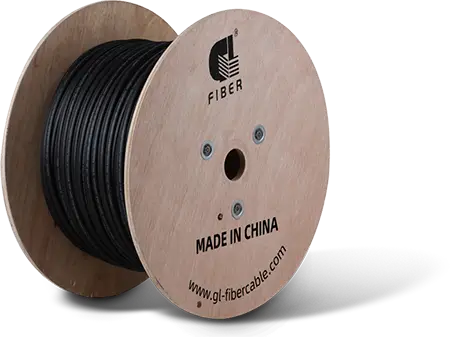
When planning a fiber optic network installation, one of the most common questions is: How deep are fiber optic cables buried? Proper burial depth is critical for the safety, durability, and performance of your communication infrastructure. This guide provides a comprehensive overview of industry standards, best practices, and a complete solution for direct-buried fiber optic cable installation.
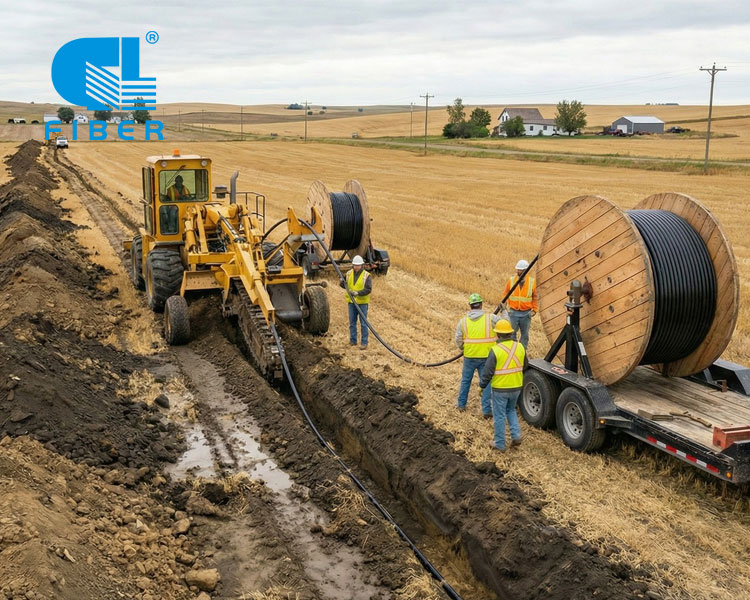
Why Burial Depth Matters?
Burying
underground fiber cable at the correct depth protects it from:
Physical Damage: From digging, agriculture, ground freezing, and surface activities.
Environmental Stress: Moisture, temperature fluctuations, and rodent activity.
Accidental Breaks: Caused by construction or landscaping work.
A properly installed
direct-buried fiber optic cable ensures long-term reliability and minimizes maintenance costs and service disruptions.
Recommended Burial Depth Standards
While local codes and soil conditions dictate specific requirements, general industry guidelines are:
Standard Residential/Commercial Areas: 24 to 36 inches (60 to 90 cm) deep.
Under Roadways or Driveways: 36 to 48 inches (90 to 120 cm) deep, often within a conduit for added protection.
Agricultural or Rural Land: At least 36 inches (90 cm) to avoid plowing and trenching equipment.
In Rock or Difficult Terrain: Depth may be reduced if cable is placed in a protective conduit or armored casing.
Always consult local utility regulations and obtain necessary permits before excavation.
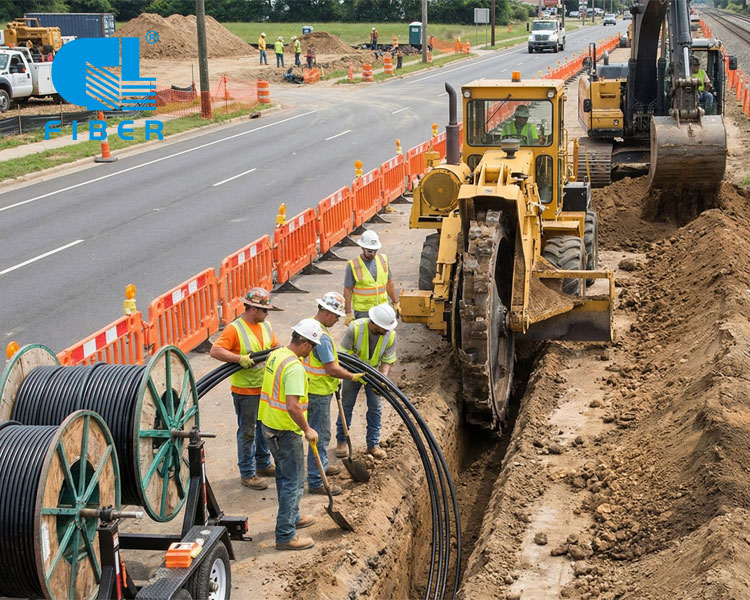
A Complete Solution for Direct-Buried Fiber Optic Installation
A successful installation relies on more than just digging a trench. It requires a systematic approach with the right materials and hardware. Here is a step-by-step overview integrating key components for a robust
buried fiber optical cable system.
1. The Cable: Armored for Maximum Protection
For direct burial, standard outdoor cables are often insufficient. We recommend using an armoured fiber cable designed specifically for harsh underground environments. These cables feature:
Corrugated Steel Tape (CST) or Interlocking Armor: Provides crush resistance and protection from rodents.
Water-Blocking Materials: Gel-filled or dry water-blocking elements prevent moisture ingress.
UV-Resistant Outer Jacket: Essential for any portion of cable exposed above ground before burial.
For high-quality, reliable options, explore our range of direct-buried fiber optic cables, engineered for durability and performance in challenging conditions.
2. Trenching & Conduit (When Required)
Trenching: Dig a trench to the required depth and width. Keep the bottom smooth and free of rocks.
Conduit: While not always mandatory for armored cables, using a conduit (PVC or HDPE) provides an extra layer of protection, simplifies future upgrades, and is often required under roads. Include innerducts for multi-cable pulls.
3. Bedding & Backfilling
Place a layer of fine sand or screened soil (about 2-3 inches) at the trench bottom as bedding.
Lay the cable carefully, avoiding sharp bends or tension.
Backfill initially with another layer of soft, rock-free material before replacing the rest of the soil.
4. Critical Above-Ground Hardware & Transition Points
The burial is only part of the system. Where the cable emerges, connects, or is suspended, specialized hardware ensures security and longevity. This is where a complete hardware solution is vital.
Termination & Suspension: Use Preformed Dead Ends and Tension Clamps specifically designed for the cable type to securely terminate and support the cable at poles or structures, transferring mechanical load away from the fragile fibers.
Secure Routing: Cable Down-Lead Clamps and Stainless Steel Straps with Buckles guide and fasten the cable vertically on poles or walls, preventing abrasion and wind-induced damage.
Organization & Storage: Cable Storage Brackets and Brackets with Hooks provide neat, accessible loops for slack fiber management at splice points or distribution terminals.
Mid-Span Support: Suspension Clamps are used to support the cable between poles without excessive tension, often integrated with Formed Wire components for ADSS or other aerial/transition sections.
5. Warning & Identification
Place a continuous warning tape or detectable mesh about 12 inches above the cable in the trench to alert future excavators.
Install permanent markers at key points like corners, splice locations, and at regular intervals.
Conclusion: The Importance of a Holistic Approach
Knowing how deep to
bury fiber optic cables is just the starting point. A safe and reliable installation demands a full direct-buried fiber cable solution that includes:
Selecting the correct armoured fiber cable.
Adhering to depth and local code requirements.
Using a complete suite of compatible, high-quality hardware for termination, support, and management at all above-ground transition points.
By integrating robust cable technology with professional-grade hardware, you build a network that is protected underground and secured above it, ensuring optimal performance for decades.
For a reliable and durable backbone for your next project, explore our engineered range of direct-buried and
armored fiber optic cables and matching hardware kits.



 ADSS Fiber Optic Cable
 OPGW Optical Ground Wire
 Bare Conductor
 Communication Optical Fibre
 Polarization-maintaining Fiber
 Aerial Fiber Cable
 Duct Fiber Cable
 Direct Buried Fiber Cable
 FTTH Drop Cable
 Air Blown Micro Cable
 Armored Fiber Optic Cable
 High Density Ribbon cable
 Biologically Protective Cable
 FTTX Tactical Cable
 Indoor Fiber Optic Cable
 Hybrid Fiber Optic Cable
 Fiber Optic Assemblies

 Company Profile
 Development History
 Qualification Honor
 Company Videos
 Exhibiting Overseas
 Our Solution